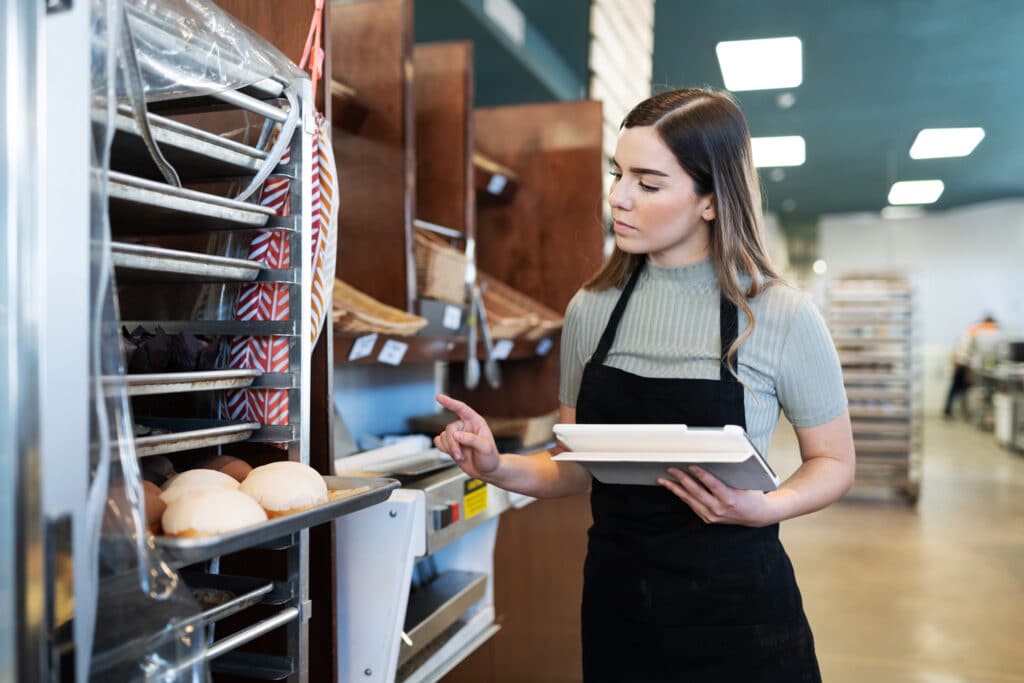
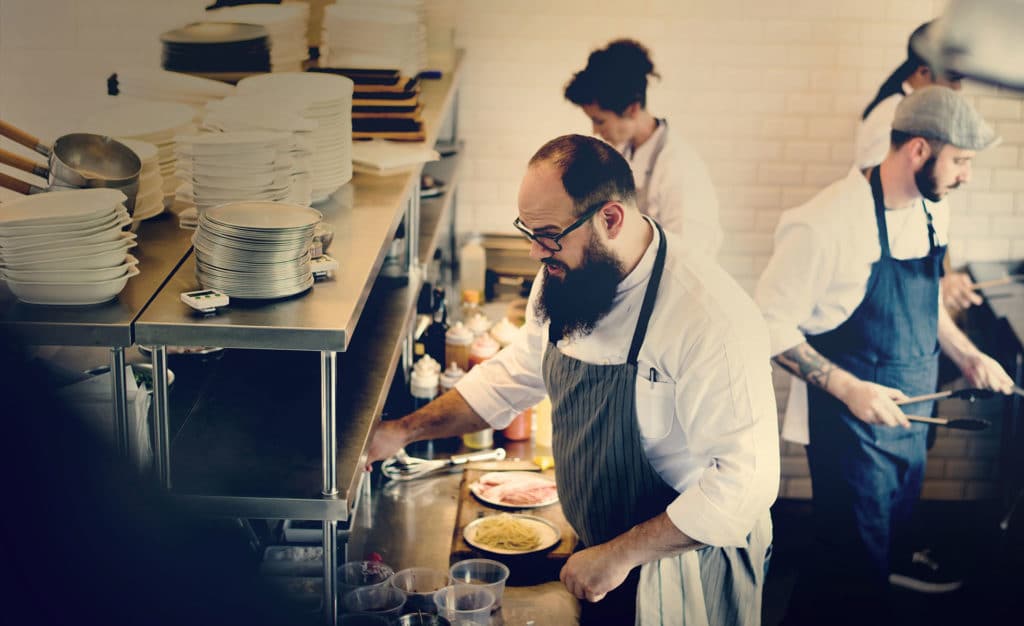
Standardized back of house procedures protect margins, strengthen compliance, and deliver consistent guest experiences across every location.
Creating strong, reliable back of house (BOH) standard operating procedures (SOPs) is one of the most impactful ways to improve restaurant consistency, efficiency, and profitability. In multi-unit operations especially, standardized BOH SOPs ensure every task—whether food prep, cleaning, or compliance—is executed the same way across all locations. This guide explains what BOH SOPs are, why they matter, and how you can create, digitize, and refine them to achieve accountability, reduce waste, and protect margins at scale.
Before diving into definitions and frameworks, it helps to understand the tangible benefits you gain from well-built BOH SOPs.
Operators who standardize their back of house workflows consistently report measurable improvements:
Lower food costs: Structured recipes and portion-control SOPs reduce waste and variance. Alicart Restaurant Group, for example, achieved a consistent 2-3% cost savings after replacing a patchwork of systems with a single source of truth for recipes, scheduling, and reporting.
Faster onboarding: New hires ramp up quickly when every task has a clear, step-by-step reference point. Bavarian Bierhaus onboarded new managers more efficiently after transitioning daily tasks from spreadsheets to a centralized, cloud-based system.
Stronger compliance: Documented procedures create audit-ready evidence for every shift, reducing regulatory risk.
Improved labor efficiency: One multi-unit operator identified 563 distinct tasks required to run a single restaurant. When each task has a documented time standard, you can forecast labor needs with precision and eliminate hidden inefficiencies.
Consistent guest experience: Standardized execution means guests receive the same quality at every location, on every shift.
BOH SOPs are documented instructions that standardize kitchen and operational processes to ensure consistency, safety, and efficiency. These procedures turn institutional knowledge into clear, repeatable workflows covering everything from ingredient storage to equipment sanitation.
When executed consistently, BOH SOPs safeguard food safety, reduce waste, and preserve labor efficiency. Multi-unit operators often find that tightening BOH systems leads directly to improved margins. Standardized SOPs also minimize compliance risk and strengthen audit readiness by providing operational evidence for every shift.
The restaurant back of house encompasses every area guests don’t see—the kitchen, prep stations, walk-ins, dish pits, storage rooms, and manager offices. SOPs bring structure to each of these zones so nothing falls through the cracks.
Effective BOH SOPs span every process behind the pass. The following categories create a foundation for compliant, efficient operations:
SOP Category | Purpose | Example Tasks |
|---|---|---|
Food flow & production | Maintain quality, freshness, and portion control through every prep step | Receiving, labeling, prep lists, cooking temps |
Cleaning & sanitation | Ensure hygiene and prevent contamination | Surface cleaning, dish station checks, waste disposal |
Equipment & facility maintenance | Protect assets and prevent downtime | Daily equipment checks, maintenance logs |
Compliance & safety | Meet regulatory requirements | Temperature logs, allergen labeling, pest control records |
Troubleshooting & escalation | Provide guidance when issues occur | Equipment malfunctions, product recalls, injury protocols |
Each category serves a distinct purpose, but together they form an interconnected system:
Food flow & production: Covers receiving standards, FIFO labeling, recipe adherence, and cooking temperatures to ensure every dish meets brand standards.
Cleaning & sanitation: Defines frequencies, products, and verification methods for every surface, from prep tables to floor drains.
Equipment & facility maintenance: Prevents costly breakdowns by scheduling inspections and logging service history.
Compliance & safety: Creates the documentation trail health inspectors and auditors require.
Troubleshooting & escalation: Gives staff a clear playbook for equipment failures, product recalls, or workplace injuries.
Covering these areas ensures every team can pass audits, protect guests, and deliver the same experience across shifts and stores.
Consistency is the foundation of every successful multi-unit brand. Without standardized BOH SOPs, each location develops its own habits—some effective, many not. The result is unpredictable food quality, uneven labor costs, and compliance gaps that put the entire brand at risk.
Consider the impact of a single unstandardized process: if one location uses a different portioning method for a high-cost protein, the food cost variance can add up to thousands of dollars per quarter. Multiply that across 10, 50, or 100 locations and the impact becomes significant.
Standardized formats and templates ensure every procedure follows the same structure—title, purpose, steps, verification—so expectations are clear and enforceable. Each SOP should assign a task owner and validation method, such as manager approval or photo verification via a digital checklist.
Building effective SOPs follows a clear, repeatable workflow. Use these steps to develop procedures that your teams will actually follow:
Audit current practices: Walk every station and observe how tasks are performed today. Identify inefficiencies, risks, or quality inconsistencies.
Prioritize high-impact areas: Focus first on food safety, cost control, and guest experience. These deliver the fastest return on your effort.
Standardize formats: Use a consistent template to document each procedure. A uniform structure makes SOPs easier to learn, follow, and audit.
Assign accountability: Define who owns and verifies each SOP task. Accountability without ownership is just paperwork.
Train and validate: Roll out new SOPs with hands-on training. Verify comprehension through observation and digital task completion.
Review and iterate: Collect feedback from line staff and managers. Update procedures based on what works in practice, not just in theory.
|
SOP Field |
Description |
Example |
|---|---|---|
|
Task |
The specific activity |
Sanitize prep table |
|
Owner |
Who performs it |
Line cook |
|
Frequency |
How often |
Every 2 hours |
|
Steps |
Specific actions |
Clear debris → Spray sanitizer → Wipe dry |
|
Verification |
Proof of completion |
Manager sign-off or photo upload |
This framework ensures procedures are actionable, measurable, and easy for any team member to follow.
That level of detail may seem daunting, but it reveals how much operational clarity you gain when every task is documented and measured.
A digital SOP is an online checklist or workflow that assigns, tracks, and reports tasks in real time. Digitization transforms SOPs from static binders into dynamic action plans that drive accountability and efficiency.
Feature | Traditional (Paper) SOPs | Digital SOPs |
|---|---|---|
Accessibility | Binder at one station | Mobile access on any device |
Updates | Print and redistribute | Instant push to all locations |
Verification | Manual signature | Photo upload with timestamp |
Oversight | In-person review | Real-time dashboard |
Compliance trail | Paper files | Automated digital audit log |
Scalability | Difficult across locations | Seamless multi-unit rollout |
Key advantages of digital SOPs include:
Mobile access for staff on every shift
Photo-based proof and timestamped completion
Alerts and escalations for missed or overdue tasks
Instant cross-location updates from headquarters
With Restaurant365, you can update menus, policies, or cleaning standards instantly and know every location is aligned—creating a single, company-wide source of truth.
High turnover and tight margins make fast, effective training essential. Industry reports show that the restaurant industry’s annual turnover rate consistently exceeds other sectors, making efficient onboarding a competitive advantage.
Standardized SOPs and digital checklists act as training tools, enabling new hires to learn on the job with visual, step-by-step guidance.
Here is how you can optimize your onboarding process:
Pair SOPs with hands-on training: New hires follow digital checklists while experienced team members demonstrate each task.
Use photo and video references: Visual aids reduce misinterpretation and language barriers.
Track competency digitally: Managers monitor task completion rates to identify where additional coaching is needed.
Reinforce with daily checklists: Repetition builds muscle memory and confidence.
New employees need less time shadowing and make fewer mistakes because every task has a clear reference point. Digital SOPs also let managers monitor competency and reinforce training where needed, improving performance across all experience levels.
Accessible, well-documented SOPs solve that problem by putting the right information in front of every team member at the right time.
Digital prep lists and production planning tools synchronize every station.
Here is how the workflow operates in practice:
The kitchen manager uses a digital prep list to assign tasks based on forecasted sales.
Line cooks mark items complete in real time.
The system alerts managers to shortages or issues.
End-of-shift data informs tomorrow’s forecasts.
This continuous loop minimizes redundancy, prevents overproduction, and keeps each shift running smoothly.
The impact of aligning prep to actual demand extends beyond waste reduction. Restaurant365 connects prep list execution directly to Inventory & Purchasing, giving you real-time insight from ordering through service.
Manual checklists are easy to lose, difficult to verify, and nearly impossible to analyze at scale. Digital tools automate oversight and provide visibility from anywhere.
Essential features for a digital SOP solution include:
Centralized template libraries: Store and manage all SOPs in one location.
Task-based digital checklists: Mobile-friendly interfaces staff can access on any device.
Real-time dashboards: Multi-site tracking for regional and corporate leaders.
Photo verification and timestamp logging: Proof of completion that holds up under audit.
Auto-escalation alerts: Automatic notifications for missed or overdue tasks.
The switch from paper to digital audit trails not only increases compliance confidence but also saves labor hours and strengthens accountability. With more than 200 POS-centric dashboards and alerts available on both desktop and mobile, Restaurant365 brings all these capabilities together within one connected back office platform.
Once digital SOPs are in place, performance measurement becomes continuous rather than periodic.
You should track these key performance indicators:
SOP completion rates by location and shift.
Exceptions or overdue tasks.
Audit and inspection scores.
Ticket times and re-fire rates.
Food waste and food cost variance.
KPI | Objective | Sample Insight |
|---|---|---|
SOP completion | Verify task adherence | 98% completion rate across all stores |
Food waste % | Track efficiency | Reduced waste 5% by aligning prep to sales |
Audit score | Measure compliance | 95+ average on internal audits |
Ticket time | Monitor kitchen speed | Average ticket under 12 minutes during peak |
Food cost variance | Control spending | Actual vs. theoretical within 1.5% |
This data empowers you to identify trends, coach teams, and refine processes before small issues become systemic. With Restaurant365 Intelligence, these KPIs can be visualized in real time across all locations.
The goal is not just to collect data but to act on it. Regular review of BOH KPIs turns your SOPs from static documents into a continuous improvement engine.
BOH SOPs are living documents that evolve with menus, equipment, and regulations. You should review procedures at least quarterly and incorporate feedback from line staff and managers who use them daily.
A structured review process includes:
Quarterly audits: Compare documented procedures against actual practices at each location.
Staff feedback loops: Frontline employees often spot inefficiencies or outdated steps before managers do.
Menu and vendor changes: Every new menu item, ingredient substitution, or vendor switch should trigger an SOP review.
Regulatory updates: Health codes and food safety regulations change. Your SOPs must keep pace.
Performance data review: Use KPI trends to identify which SOPs need refinement.
A digital system makes updates frictionless—corporate teams can adjust one template and instantly push revisions to every location. This agile approach ensures consistency, minimizes compliance risk, and drives lasting operational improvement.
Small adjustments—moving a button, simplifying a step, clarifying a portion size—compound into significant operational gains over time.
BOH SOPs are documented standards for back of house processes that safeguard food quality, safety, and efficiency. They ensure every team performs key tasks consistently, protecting both guests and margins.
Review and update BOH SOPs at least quarterly, or whenever menus, equipment, or compliance standards change. The kitchen manager or general manager typically leads the review, with input from key staff.
The most common hurdles include:
Staff resistance to new processes.
Inconsistent adoption across shifts or locations.
Weak oversight and follow-through.
Outdated or overly complex documentation.
Address these with strong training, leadership commitment, and digital platforms like Restaurant365 that automate accountability and provide real-time visibility.
Track SOP completion rates, audit scores, food waste percentages, food cost variance, and ticket times to gauge compliance and identify improvement areas.
They outline precise handling, storage, and cleaning procedures that maintain hygiene standards and meet local health regulations. Digital tracking helps ensure every standard is followed and documented for inspectors.
Combine clear documentation with hands-on training, manager reinforcement, and digital accountability tools. When staff see that SOPs make their jobs easier—not harder—adoption improves naturally.
Yes. Standardized recipes, portion controls, and prep procedures directly reduce waste and variance. Operators using structured SOPs alongside actual-vs.-theoretical reporting consistently identify and eliminate hidden cost leaks.
BOH SOPs focus on kitchen operations, food production, sanitation, and equipment maintenance. Front-of-house SOPs cover guest-facing activities like seating, service standards, and payment processing. Both are essential, but BOH SOPs tend to carry greater food safety and compliance implications.
By prioritizing standardized, digitized BOH SOPs, you can achieve true operational consistency—reducing costs, improving compliance, and strengthening the guest experience across every location. With an integrated platform like Restaurant365, these processes align seamlessly with accounting, inventory, and workforce data to help your restaurant thrive.
Schedule a free demo to see how Restaurant365 streamlines your back of house operations.
Blog Menu
Share this blog:
See why more than 50,000 restaurants use Restaurant365
Restaurant365 brings together accounting, operations, scheduling, and more in a flexible platform—empowering restaurants to choose the solutions they need and scale with confidence.