
Sales have stabilized in many markets and traffic has leveled out, which makes it feel like the industry has found its footing again. But the pressure is still there.
The demand for restaurants remains resilient. According to the National Restaurant Association, 61 percent of adults consider dining out essential to their lifestyles, and the industry reached $1.4 trillion in annual sales. Restaurants remain deeply woven into consumers’ lives.
But sustained demand has not translated into sustained profitability.
In 2025, many restaurants saw food costs between 28 and 35 percent of sales while net margins stayed tight, often in the low single digits. Only the strongest units approached 8 to 10 percent. That structure leaves very little room for error. A modest increase in labor, a spike in protein pricing, or a few underperforming shifts in a row can compress profit quickly.
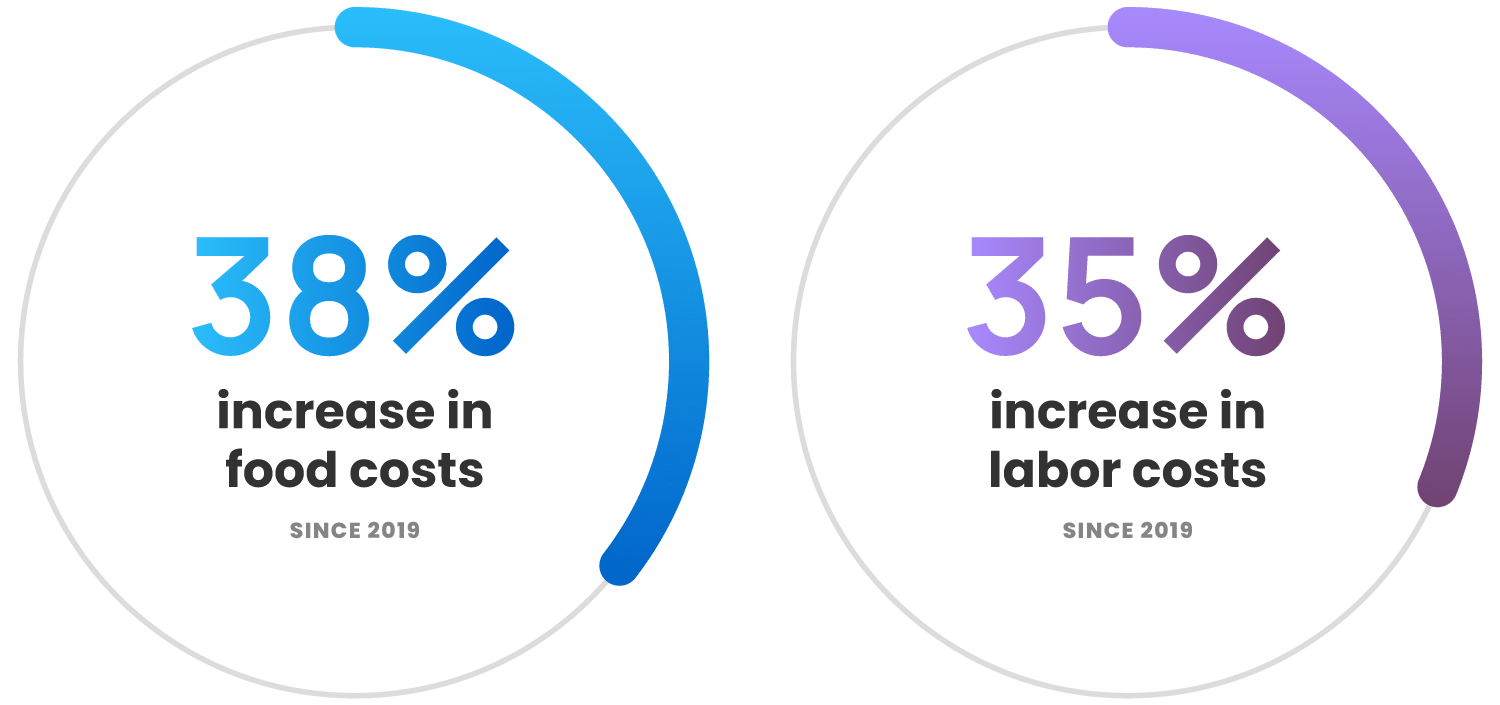
Since 2019, food costs have increased 38 percent and labor costs have risen 35 percent. For 45 percent of operators, that meant they were not profitable in 2025. The gap between resilient demand and operational profitability is not theoretical. It is showing up in P&Ls across the industry.
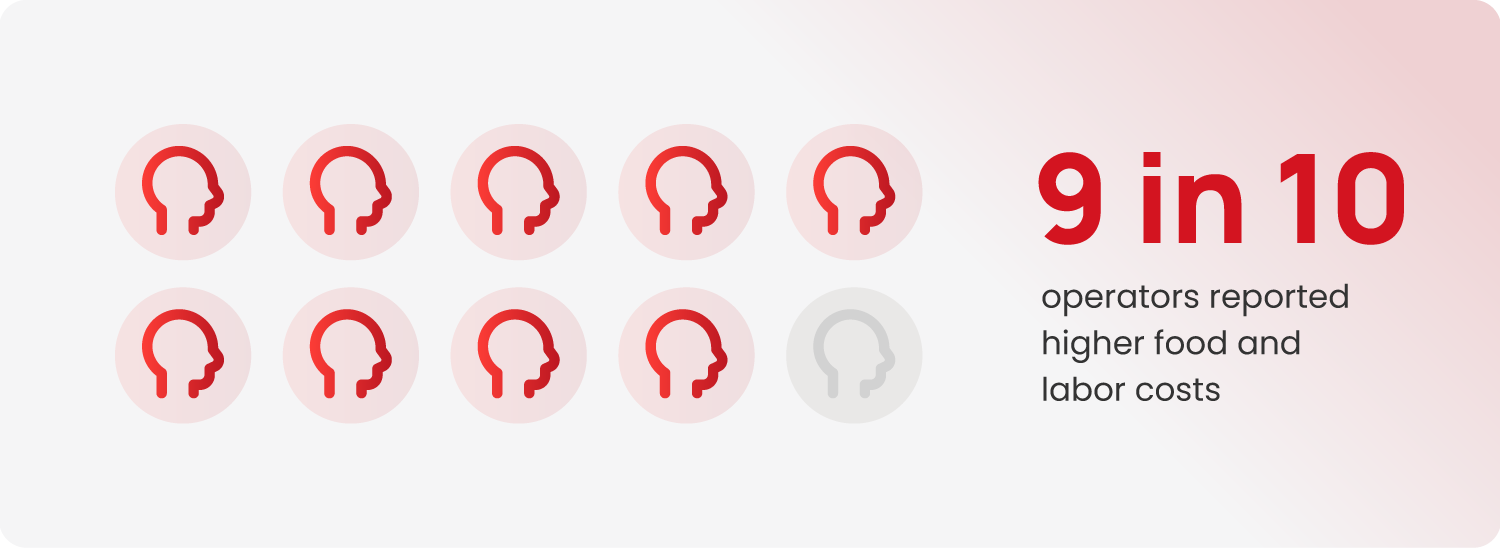
According to R365’s 2026 State of the Restaurant Industry Report, over 9 in 10 operators reported higher food and labor costs. This is not a short term spike. It reflects a structural reset. Cost baselines are higher, and they have not meaningfully come down.
Guests are still dining out, but they are more selective about where and how often they spend. Slower job and wage growth combined with elevated household prices have constrained spending. Value and consistency carry more weight in decision making than they did a few years ago.
That combination of elevated costs, tighter margins, and more intentional demand defines 2026.
The operators who outperform this year will not rely on longer hours or broad price increases. They will rely on control. They will treat data as part of daily operations, not something they review at the end of the month.
In this environment, accurate data is not enough. If you only see food cost after inventory is closed or labor variance after payroll runs, you are already reacting. By the time the issue shows up in a report, the margin impact has already happened.
The advantage now comes from having timely visibility and using it to make proactive adjustments. That might mean adjusting prep before waste compounds, correcting staffing before overtime builds, or shifting promotions before traffic softens.
When margins are thin, discipline wins. And discipline depends on seeing what is happening in time to do something about it.
Across segments, net margins remain tight:
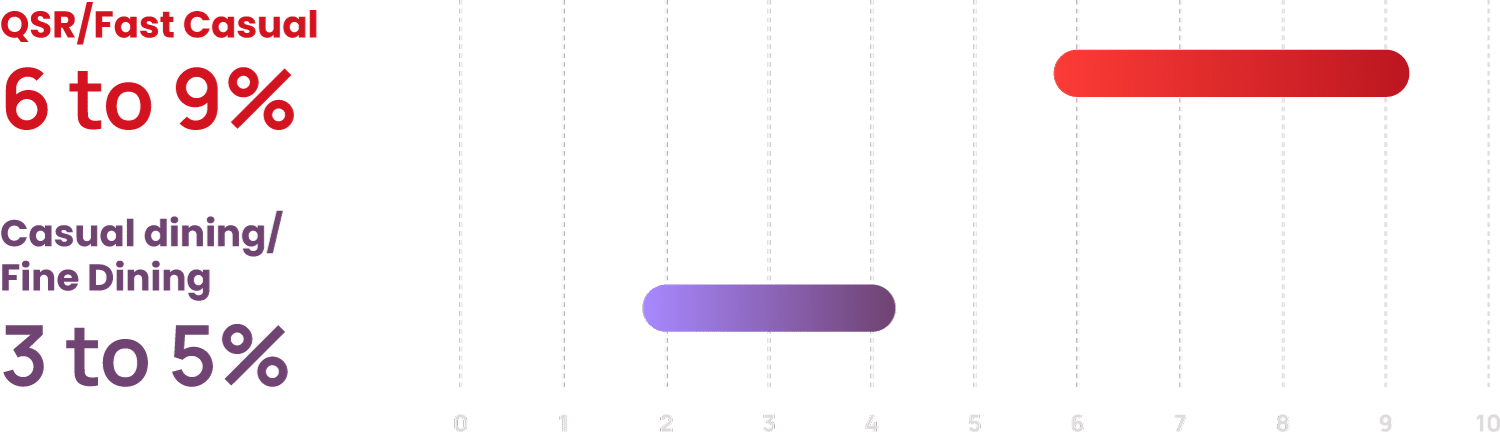
For many operators, that means running a business where a one or two point shift in cost determines whether a month is profitable or flat.
When prime cost runs 60 to 70 percent of sales, there is almost no buffer. A two point swing in food or labor can erase profitability for the week or the month.
This is not limited to smaller operators. Even large public restaurant companies are navigating margin compression. Restaurant Brands International, the parent company of Burger King, Popeyes, and Tim Hortons, generated a 9.6% net profit margin in 2025 compared with about 12.1% the year before, despite revenue growth. That illustrates how profitability can tighten even with scale. At the same time, Wendy’s announced plans to close hundreds of underperforming U.S. locations to strengthen unit economics and overall profitability.
The common thread is not declining demand. It is tighter economics. When margins are measured in single digits, performance gaps cannot be absorbed. They have to be corrected.
Profitable no longer means comfortable. It means controlled.
Inflation reset cost baselines higher. Traffic stabilized, but demand became more selective. Consumers expect value and consistency. Inefficiencies that were once absorbed now show up immediately.
In earlier cycles, a strong weekend could offset a weak Monday. In 2026, weak days compound. Efficiency now drives more profit than pricing does.
The math is straightforward:
Small, repeatable improvements outperform big, reactive swings. That kind of improvement does not start with cutting randomly or raising prices across the board. It starts with tightening control over the largest controllable costs in the business. And that begins with prime cost.
Prime cost remains the clearest signal of restaurant health because it represents the majority of controllable expense. It combines cost of goods sold and labor, which together make up the largest share of your operating costs.
When prime cost drifts even slightly, profitability tightens quickly. A few points of variance in food or labor can erase margin before the month is over.
That is why monthly tracking falls short. By the time a P&L is closed and reviewed, several weeks of missed targets are already locked in. At that point, the only option is to react.
Operators who protect margin do not wait for the month to end. They manage prime cost while there is still time to adjust.
They treat prime cost as an operating metric rather than just an accounting result. It is something they manage in real time, not something they review after the fact.
To do that, they first remove visibility gaps. They identify where delays are caused by disconnected systems, manual spreadsheets, or inconsistent processes, and address those bottlenecks directly.
In practice, that means:
With integrated data, managers can monitor food cost variance by category, track labor against forecast by daypart, and review prime cost trends week over week without waiting on back office reconciliation.
The difference is timing. They correct midweek while there is still room to adjust, not after the month has already closed.
Prime cost targets vary by concept, but there are general guardrails most operators aim for:
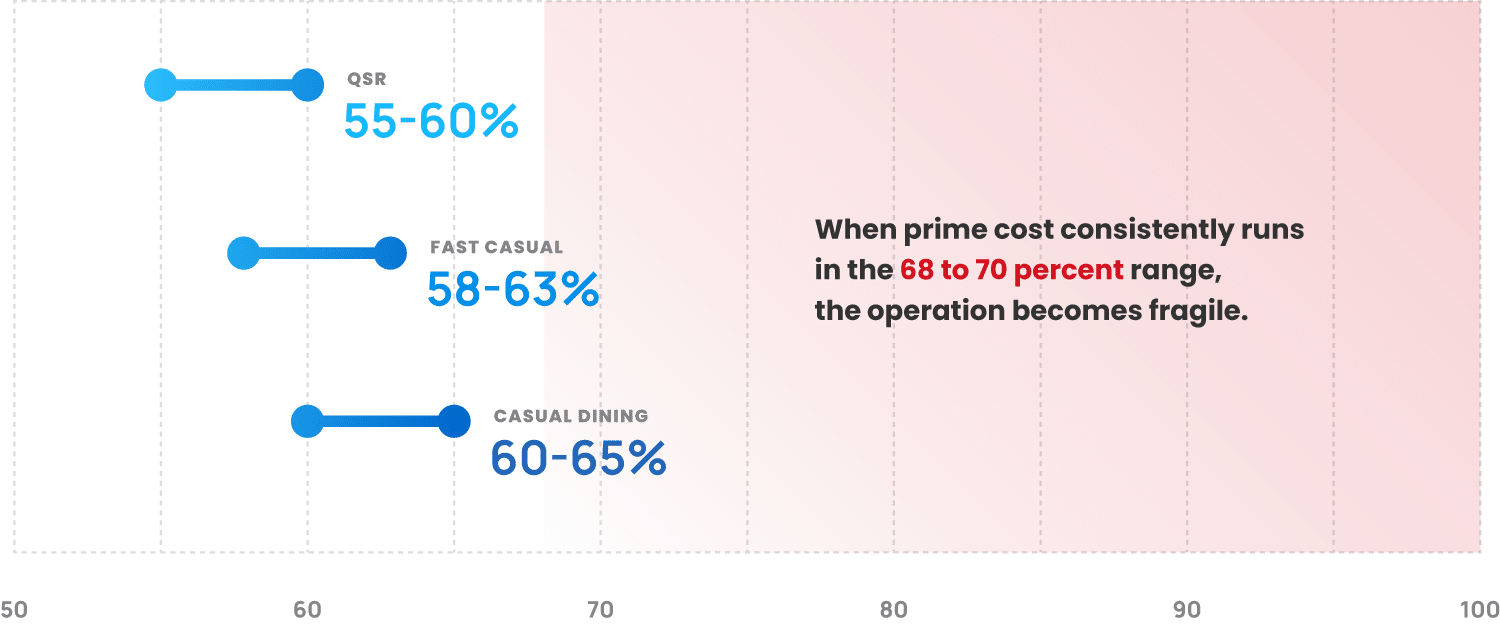
When prime cost consistently runs in the 68 to 70 percent range, the operation becomes fragile. At that level, even a minor cost spike or soft sales week can put profitability at risk.
Strong operators show what disciplined execution can deliver. Chili’s, for example, posted same store sales growth of more than 30 percent in parts of 2025, with traffic up in the 20 percent range. That performance translated into meaningful improvement in restaurant level margins, even as much of the casual dining segment continued to face pressure.
The common thread is not a single promotion or pricing move. It is consistent execution against controllable costs.
Your menu is your margin strategy in plain sight. It determines what you sell, what you promote, and ultimately what flows to the bottom line.
When recipe costs are outdated, mix shifts go unexamined, or pricing decisions are made passively, margin erodes quietly over time. Most operators underestimate how much profit lives inside a small group of high volume items.
Winning operators treat menu performance as an ongoing discipline, not a once-a-year exercise.
They cost every recipe accurately and update those costs consistently as vendor pricing changes. That requires a connected system that ties inventory, purchasing, and recipe data together so updates flow through automatically instead of relying on spreadsheets or manual recalculations.
They rely on a simple menu mix view to understand performance:
From there, they act with intention. They apply selective pricing adjustments where value perception supports it. They rework low margin, high volume items to improve contribution. They build bundles strategically to protect margin instead of discounting it away.
Most importantly, they focus on improving the items that are already driving revenue rather than overhauling the entire menu at once.
Labor is one of the largest controllable expenses in the business, but it is only truly controllable when it follows demand.
When scheduling is based on instinct, habit, or last year’s patterns, margin compresses quickly. A few overstaffed shifts each week can quietly erase thousands over the course of a quarter. On the flip side, understaffing damages service, guest experience, and long term traffic.
The goal is not simply to cut labor. The goal is alignment.
Winning operators schedule against reality, not assumption.
They forecast sales by daypart and build schedules around expected demand rather than static templates.
They set clear labor percentage targets aligned to realistic volume.
They monitor sales per labor hour in real time and compare actual performance to forecast daily. When sales shift, labor adjustments follow.
They also treat retention as a financial lever, not just a culture initiative. Turnover increases recruiting costs, training time, and operational inconsistency. It disrupts teams and adds hidden expense.
Predictable schedules, clear training paths, and performance accountability reduce churn and stabilize labor efficiency over time.
Labor discipline is not about fewer hours. It is about smarter hours.
Inventory variance rarely shows up as a dramatic event. It builds quietly.
The gap between theoretical and actual food cost exposes the everyday issues that chip away at margin. Waste. Over portioning. Theft. Receiving errors. Inconsistent prep standards.
Each one may seem small in isolation. Together, they compound into meaningful annual loss.
When food cost is already running between 28 and 35 percent of sales, even a one point variance represents significant dollars over the course of a year.
Inventory discipline is not about counting for compliance. It is about protecting profit.
Winning operators treat inventory control as a weekly operating rhythm, not a monthly reconciliation exercise. That rhythm is supported by systems that keep inventory, purchasing, and sales data connected, so visibility is current rather than delayed.
They run cycle counts on high value and high risk items every week, not just at month end, and use real time variance reporting to identify issues early instead of discovering them weeks later.
They set pars and reorder points based on actual usage trends instead of habit or supplier minimums. With connected purchasing and usage data, reorder decisions reflect true demand rather than static assumptions.
They tighten receiving controls so invoices, quantities, and quality are verified consistently, often using digital invoice capture and automated matching to reduce manual errors.
They make variance a standing topic in manager meetings. Not as blame, but as accountability. When systems surface unusual usage patterns or theoretical versus actual gaps, someone owns the correction.
Inventory management becomes operational discipline embedded in the culture, supported by visibility and automation rather than spreadsheets and memory.
Most operators are not short on effort. They are short on time.
When managers spend hours reconciling invoices, chasing down numbers, or building schedules manually, that work crowds out everything else. Coaching slips. Prep discipline slips. Variance gets reviewed late instead of early.
In a tight margin environment, admin work becomes expensive.
The point of automation is simple. It reduces manual tasks and surfaces issues sooner. That gives operators time to focus on the parts of the business that actually drive performance, while enabling faster adjustments and more informed decisions in real time.
Winning operators do not try to automate everything at once. They focus first on the processes that create the most friction, the most delay, or the most risk.
They start with forecasting. Instead of relying on static scheduling templates, they use data to align labor with expected demand so staffing adjusts as sales shift.
They rely on exception alerts to flag unusual food cost or labor variance early, while there is still time to correct it. That early visibility prevents small issues from becoming monthly surprises.
They streamline invoice capture and accounts payable workflows to reduce manual entry and minimize errors. Reconciliation happens faster and with greater accuracy.
Most importantly, they connect POS, inventory, labor, and finance data so performance can be viewed in one place. Managers are not pulling numbers from multiple systems just to understand how the week is going.
The objective is simple. Reduce manual work. Increase visibility. Act sooner.
When systems are connected and information is current, decisions happen faster and with more confidence.
Profitability in 2026 comes from systems, not heroics.
The brands that outperform will not rely on one strong quarter or a single initiative. They will build habits that compound over time.
That means:
Margin rebuild is not about dramatic moves. It is about disciplined execution across the controllable parts of the business.
Small improvements, applied consistently, create durable margin. And in 2026, durable margin wins.
Monthly reporting shows what happened, not what is happening. When prime cost is reviewed only after the P&L closes, several weeks of variance are already locked in. Managing prime cost daily or weekly allows operators to correct mid-cycle instead of absorbing the loss.
Start with visibility. Identify where prime cost, labor variance, or inventory gaps are reviewed too late to act. Focus on one controllable area, implement a consistent review cadence, measure the impact, and repeat what works.
Guide Contents
Book a demo to see how your current data could work harder for you and where margin opportunity exists in your operation today.
Growing menu of restaurant resources all designed to help you optimize your restaurant operations.
Restaurant365 brings together accounting, operations, scheduling, and more in a flexible platform—empowering restaurants to choose the solutions they need and scale with confidence.