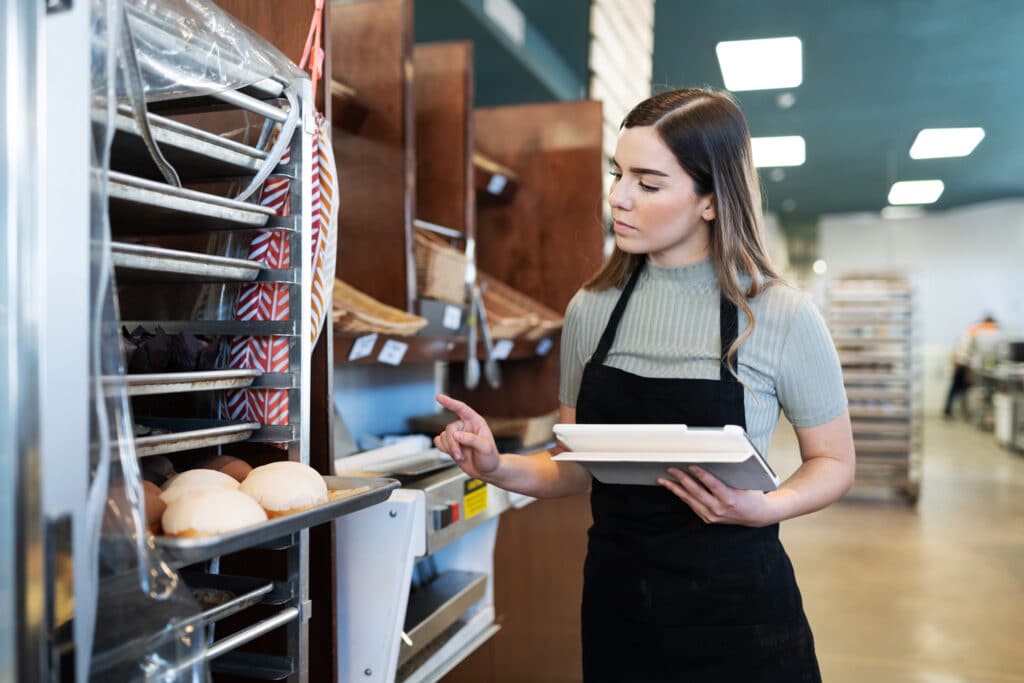
Unify payroll, HR, and workforce management to automate compliance and scale operations across every location.
Integrating payroll, HR, and workforce management has become mission-critical for enterprise restaurant groups. As labor laws tighten and workforce models evolve, manual workflows no longer sustain compliance or speed. Enterprise payroll platforms now unify payroll, HR data, and time tracking to automate accuracy at scale—essential for multi-unit brands managing hundreds or thousands of team members.
According to Nation’s Restaurant News, labor remains the single largest controllable expense for most restaurant operators. The right payroll platform transforms that challenge into an opportunity for visibility, control, and profitability.
This guide compares seven top enterprise payroll solutions that connect global workforce operations with HR systems. Each platform delivers compliance confidence, workforce visibility, and systems integration to support the precise demands of modern hospitality organizations.
An enterprise payroll platform automates wage calculations, tax filings, and compliance reporting across multiple locations, states, or countries. These systems integrate with HR modules to centralize employee data, benefits administration, and time tracking in one environment.
For restaurant groups, enterprise payroll platforms connect directly with POS systems to sync sales and labor data. This integration eliminates manual data entry, reduces errors, and delivers real-time insights into labor costs.
Restaurant365 is the only cloud platform built specifically for restaurant operations, seamlessly combining accounting, payroll, scheduling, and HR in one connected system. We integrate directly with leading POS platforms, automatically syncing sales and labor data to simplify payroll and minimize errors.
Restaurant365 automates time tracking and compliance while delivering real-time labor and cost insights across every location. Operators gain automated tip distribution, overtime tracking, and scheduling tools aligned with local labor laws—all within a single, unified platform. We also connect payroll to accounting to shorten month-end close and reduce reconciliation work.
Many restaurant groups report measurable ROI, from faster payroll cycles to shortened monthly closes and improved labor control. Alicart Restaurant Group achieved 2-3% average cost savings across concepts and gained 100% visibility into labor and inventory data across all locations after implementing Restaurant365.
Learn more about Restaurant365 Accounting & Payroll Software.
Workday is a premium enterprise payroll and HR platform recognized for its advanced Human Capital Management (HCM) suite. HCM combines payroll, benefits, time tracking, and talent analytics in one data environment, helping large operators forecast workforce needs and mitigate turnover risk.
SAP SuccessFactors provides global payroll and HR support with localization in over 40 countries. Its flexible design allows hospitality enterprises to tailor payroll processes to local labor requirements while maintaining a consistent compliance framework across diverse regions.
ADP Global Payroll has long defined enterprise compliance and employee self-service standards. Supporting up to 140 countries, ADP connects payroll, HR, and workforce systems within one operational layer—valuable for compliance-focused organizations.
Rippling takes an API-driven approach that integrates payroll, HR, and IT management. Its unified “employee graph” architecture links payroll data to system access and device provisioning—ideal for brands seeking automation beyond HR alone.
Papaya Global serves enterprises with distributed teams through a cloud-native payroll platform covering more than 100 countries. Its mobile app delivers on-demand access to payslips, leave requests, and compliance documentation.
Paylocity focuses on payroll automation and HR integration for organizations primarily in the U.S., with expanding support for global payroll. Its system links payroll with HR modules, scheduling, and benefits administration to simplify deductions, treasury management, and on-demand pay access.
Feature | Strengths | Limitations |
Payroll automation | Efficient pay and deduction automation | U.S.-centric configuration |
Global coverage | Partner-enabled in 100+ countries | Added integration needs |
Reporting | Solid core analytics | Limited deep workforce forecasting |
Deel specializes in managing international pay for both employees and contractors through one dashboard. Supporting over 150 countries, Deel automates compliance, tax filings, and multi-currency payments while offering real-time visibility into payment activity.
Platform | Best For | Global Coverage | Restaurant-Specific Features | POS Integration |
Restaurant365 | Multi-unit restaurant groups | U.S. | Yes | Yes |
Workday | Large enterprises with complex HR needs | Global | No | Limited |
SAP SuccessFactors | Multinational hospitality groups | 40+ countries | No | Limited |
ADP | Compliance-focused global organizations | 140 countries | No | Limited |
Rippling | Tech-forward brands seeking IT integration | Global | No | Via API |
Papaya Global | Fast-scaling multinational teams | 100+ countries | No | No |
Paylocity | U.S.-centric organizations | U.S. + partners | No | Limited |
Deel | Global contractor and employee management | 150+ countries | No | No |
Enterprise-grade payroll systems must ensure wage accuracy, recordkeeping, and regulatory adherence across all locations. Core capabilities that protect multi-unit operators include:
Labor compliance means maintaining accurate wage, overtime, and reporting records across jurisdictions. Automating compliance helps eliminate manual reconciliation and reduce risk exposure.
Feature Category | Compliance Coverage | Automation Level | Mobile Support |
Wage & hour tracking | High | Full | Yes |
Multi-state reporting | High | Moderate | Yes |
Tax & labor updates | High | Full | Yes |
Self-service tools | Medium | High | Yes |
Selecting the best enterprise payroll system starts by assessing scale and integration needs. Finance and operations leaders should evaluate footprint, workforce size, and accounting integration before moving to implementation.
Tradeoffs usually balance global coverage, HR functionality, and deployment agility.
Business Type | Top Priority | Recommended Focus |
Multi-unit U.S. brand | Automation & compliance | Payroll + scheduling integration |
Global franchise group | Localization & scalability | Multi-country payroll |
High-growth concept | Speed & cost efficiency | Cloud-native systems with APIs |
Restaurant365 helps restaurant leaders address these priorities with an all-in-one solution that unites accounting, payroll, HR, and operations—simplifying scale without adding complexity.
Payroll integration extends beyond HR efficiency. When payroll connects with inventory, scheduling, and accounting, operators gain complete visibility into their two largest controllable costs: labor and food.
Paul Potvin, a restaurant operator, explains the transformation: “We used to count inventory once a year at the end of the year. Now we’ve got a weekly AVT for labor, and a weekly P&L essentially. Those two—labor and food costs—are cost of goods. If you can nail those two, all the other stuff is kind of small potatoes.”
Restaurant365 connects payroll data directly to inventory and accounting modules. This integration enables:
For enterprise restaurant groups managing inventory at scale, this connection between payroll and operations delivers actionable insights that drive profitability.
Automated wage and hour calculations, real-time tax updates, and multi-jurisdiction compliance reporting are critical capabilities. Systems should also handle tip distribution, overtime tracking, and garnishment management automatically.
They centralize employee data and automate scheduling, payroll, and benefits for greater visibility, accuracy, and time savings. Restaurant365 centralizes payroll, scheduling, and accounting to provide a single source of truth for operations and finance.
Review coverage, local compliance expertise, and integration flexibility with existing accounting and POS systems. Consider whether the platform offers restaurant-specific features like tip management and labor cost reporting.
By continuously applying current labor rules and tax rates, automation prevents manual miscalculations and ensures complete audit trails. Automated systems update when regulations change, reducing the risk of penalties.
It empowers staff to access pay history, update information, and manage PTO—reducing administrative load and improving transparency. Self-service portals decrease HR inquiries and give employees immediate access to their information.
POS integration automatically syncs sales and labor data, eliminating manual entry and providing real-time visibility into labor costs as a percentage of sales. This connection enables smarter scheduling decisions and faster payroll processing.
Enterprise payroll platforms transform how restaurant groups manage their workforce. The right solution automates compliance, integrates with your existing systems, and delivers real-time insights that drive profitability.
Restaurant365 offers the only all-in-one platform built specifically for restaurants, connecting accounting, payroll, scheduling, inventory, and HR in one unified system. We help operators gain complete visibility into labor costs, automate compliance, and simplify operations at scale.
Schedule a Free Demo to see how Restaurant365 can streamline your payroll and workforce management.
Blog Menu
Share this blog:
See why more than 50,000 restaurants use Restaurant365
Restaurant365 brings together accounting, operations, scheduling, and more in a flexible platform—empowering restaurants to choose the solutions they need and scale with confidence.