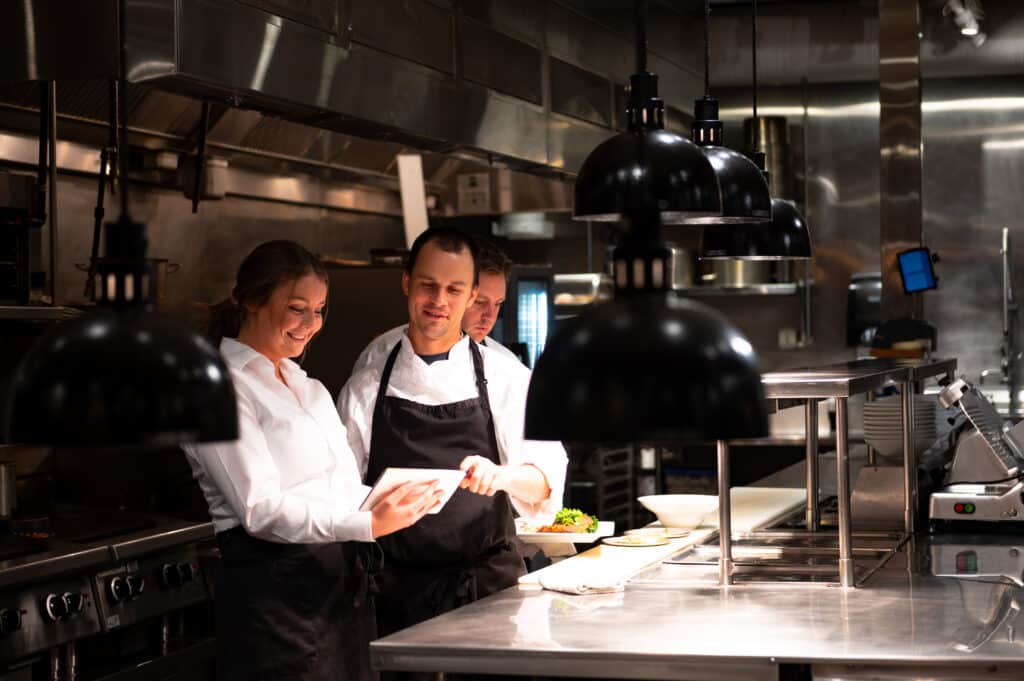
Food inventory management is one of the fastest ways to protect margins and improve restaurant profitability. With rising food costs and tighter labor models, operators need accurate, real-time visibility into inventory, waste, and usage to stay competitive.
Effective food inventory management reduces waste, theft, and over-ordering.
Real-time inventory systems improve food cost control and margin visibility.
Regular inventory counts prevent stockouts and protect guest experience.
Integrated platforms like Restaurant365 connect inventory, POS, purchasing, and accounting for better decisions.
Food inventory management is the process of tracking, ordering, storing, and using perishable and non-perishable ingredients in a restaurant. It includes monitoring stock levels, managing food costs, reducing waste, and aligning purchasing with sales trends.
A strong inventory management process helps restaurants:
Maintain consistent food quality
Optimize purchasing decisions
Control Cost of Goods Sold (COGS)
Prevent spoilage and theft
Improve profit margins
Menu engineering and recipe costing play a critical role by connecting ingredient usage to profitability at the plate level.
Unify your financials, inventory, and labor in one system.
See how R365 makes it happen.
A kitchen inventory system is the structured method (manual or software-based) used to track ingredients, beverages, and supplies throughout restaurant operations.
Inventory serves as both:
A critical operational resource
A major financial investment
Poor inventory control leads to two costly problems:
Overstocking, which causes spoilage and waste
Stockouts, which disrupt service and impact guest satisfaction
Modern inventory systems help restaurants monitor usage patterns, automate reordering, and maintain accurate stock counts across single or multiple locations.
The frequency of inventory counts depends on your concept, menu complexity, and sales volume.
Ideal for high-turnover items like produce, dairy, and proteins
Aligns ordering with actual usage
Helps prevent spoilage and stockouts
Seafood, prime cuts, specialty ingredients
Helps maintain tight food cost control
Reduces shrinkage
Non-perishables and low-variance supplies
Supports financial reconciliation
Many operators also perform flash counts on their top 10–20 ingredients, which often account for the majority of food costs.
Consistency matters more than frequency. Inventory should be counted at the same time and under similar conditions each cycle.
Curious how better food cost visibility fuels growth? Watch Drive Revenue Growth With R365 Intelligence Dashboards to see how real-time food cost, inventory, and labor insights help you protect margins and make smarter decisions.
A perpetual inventory system tracks inventory in real time. Each time an item is received, sold, transferred, or discarded, stock levels automatically update.
Benefits include:
Real-time visibility into inventory levels
Reduced manual counting
More accurate food cost data
Faster purchasing decisions
Lower risk of overstocking or shortages
When integrated with your POS system, perpetual inventory connects menu sales directly to ingredient depletion, giving operators clearer insights into food cost performance and menu profitability.
A Radio Frequency Identification (RFID) inventory system uses digital tags and scanners to automatically track inventory movement.
RFID systems:
Reduce manual counting
Minimize human error
Improve theft prevention
Increase speed and accuracy
They are especially valuable for multi-location restaurants or high-volume operations managing large inventories. While implementation costs are higher, improved accuracy and labor savings often provide a strong return on investment.
Ready to take control of your inventory and costs? Get a free demo of R365 and this visibility in action.
Effective restaurant inventory management directly impacts profitability.
Key benefits include:
Preventing waste, spoilage, and over-ordering
Improving portion control
Lowering Cost of Goods Sold (COGS)
Verifying supplier pricing
Reducing manual errors
Saving labor through automation
When inventory is tightly controlled, restaurants protect margins while maintaining consistent guest experiences.
Understanding inventory terminology helps operators manage performance more effectively.
Theoretical: What should have been used based on recipes
Actual: What was actually used
Variance: The difference between the two
Variance reveals profit leaks and operational opportunities.
Build a scalable foundation for your food business.
See how R365 makes it happen.
Inventory accuracy depends on consistency. Train staff on:
Counting methods
Units of measurement
Waste logging
Portion control
Encourage waste tracking to reduce shrinkage and improve accountability.
Align shelves with inventory sheets or digital layouts. Clear organization improves count accuracy and operational efficiency.
Schedule recurring inventory at the same time each period. Avoid counting during deliveries or peak service hours.
Refine processes regularly. Use FIFO (First In, First Out), verify deliveries against invoices, and analyze discrepancies.
Inventory data paired with daily sales reports provides better insight into trends, usage patterns, and potential cost issues.
Today’s restaurant operators increasingly rely on integrated technology instead of spreadsheets and disconnected tools.
When inventory connects with:
Purchasing
Recipe costing
POS systems
Accounting
You gain real-time visibility into food costs and operational performance.
An integrated Restaurant Enterprise Management platform like Restaurant365 helps:
Automate inventory counts
Integrate vendor invoices
Track recipe-level costing
Improve multi-unit consistency
Provide actionable financial insights
For multi-location groups, standardized inventory processes create stronger controls and more confident managers across every unit.
The most effective approach combines regular physical counts with integrated inventory software that connects to POS, purchasing, and accounting systems. Automation improves accuracy and reduces labor.
Food cost percentage varies by concept, but many restaurants target 28–35%. The ideal percentage depends on pricing strategy, menu mix, and operating model.
Restaurants can reduce waste by tracking variance, practicing FIFO, training staff on portion control, monitoring yield, and using real-time inventory systems to prevent over-ordering.
Periodic inventory is counted manually at scheduled intervals. Perpetual inventory updates continuously in real time through software integrations.
Multi-unit operations require standardized processes and centralized visibility. Integrated inventory systems provide consistency, prevent margin leakage, and allow leadership to compare performance across locations.
Blog Menu
See why more than 40,000 restaurants use Restaurant365
Food inventory management is one of the most powerful levers restaurants can pull to improve profitability. Accurate counts, consistent processes, and integrated technology transform inventory from a back-of-house chore into a strategic advantage.
By leveraging modern, connected restaurant management platforms, operators gain real-time visibility into food costs, reduce waste, improve forecasting, and make data-driven decisions that strengthen margins and elevate the guest experience.
Same ingredients. Smarter control. More profit.
Ready to see how ERP-level visibility can protect margins and support growth? Get a free demo today.
Share this blog:
See why more than 40,000 restaurants use Restaurant365
Restaurant365 brings together accounting, operations, scheduling, and more in a flexible platform—empowering restaurants to choose the solutions they need and scale with confidence.