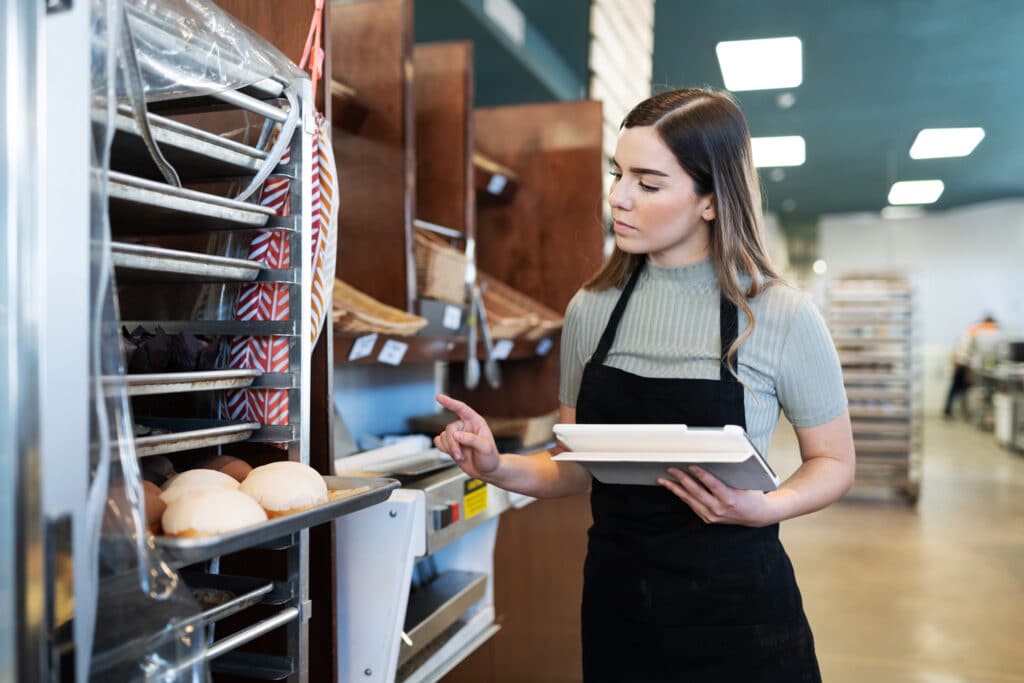
For small and midsize restaurant operators, every shift, plate, and paycheck counts. Relying on delayed reports and disconnected systems no longer works. Real-time business intelligence (BI) tools transform how SMB restaurants make decisions by unifying live data across sales, inventory, and labor into a single, actionable view. Instead of reacting to yesterday’s numbers, you can act on what’s happening now—tightening margins, improving forecasting, and identifying savings opportunities before they slip away.
Running a modern restaurant has never been more complex. Rising food costs, volatile labor markets, and unpredictable guest demand leave SMB operators working harder to maintain profitability in an environment that changes by the hour. Reliance on manual spreadsheets or once-a-week reports can leave managers reacting too late.
Most small restaurants now juggle multiple disconnected systems—POS platforms, accounting tools, scheduling apps, and inventory software—each holding critical but siloed data. The average SMB uses up to 7 different business applications that rarely integrate smoothly, creating lost time and limited visibility.
Data silos occur when information remains trapped in separate systems that don’t communicate with each other. This fragmentation prevents operators from seeing the full picture of their business performance.
The result: managers miss opportunities to cut waste or adjust labor in real time.
Real-time business intelligence (BI) refers to tools that continuously aggregate live data from multiple sources—such as POS transactions, scheduling software, inventory records, and financial systems—into a unified dashboard. This enables restaurant leaders to make immediate, fact-based decisions without waiting for end-of-day or weekly reports.
These systems rely on streaming data processing and in-memory computing to update analytics dashboards the moment new data is captured. Cloud-based BI solutions and mobile apps give multi-unit teams and on-site managers instant access to performance insights anywhere.
Step | Data source | Real-time BI action | Outcome |
1 | POS and online sales | Capture transaction data instantly | Track hourly revenue and menu mix |
2 | Inventory system | Link to ingredient usage | Detect overstocking or waste |
3 | Labor scheduler | Sync time and attendance | Adjust staffing to meet live demand |
4 | Financial systems | Consolidate invoices and spend | Monitor margins in real time |
Real-time BI connects the dots between systems, turning fragmented data into actionable insight across every shift.
The most immediate advantage of real-time BI is control. Instead of uncovering cost overruns or inventory waste after the fact, you can identify and correct issues as they unfold.
Real-time visibility into food and labor costs enables immediate adjustments. Typical measurable improvements include food cost reductions of 2–5%, up to 10 hours of weekly reporting time saved, and tighter labor optimization. Restaurants using Restaurant365’s integrated platform have achieved significant savings through streamlined inventory and reporting.
Shared dashboards foster better communication between accountants, GMs, and regional leaders. Everyone works from the same data, eliminating confusion and conflicting reports.
Real-time data empowers you to respond instantly to price changes, demand shifts, or unexpected events.
Real-time BI gives every team member—from a shift lead to a CFO—accurate, current insights that build confidence in every decision. Restaurant365 embeds analytics directly into daily workflows, uniting accounting, inventory, and labor data in one system purpose-built for restaurants.
SMB restaurants should look for purpose-built BI features that address the unique needs of foodservice operations. The most effective platforms blend powerful analytics with ease of use to accelerate adoption across teams.
Feature | Description | SMB restaurant benefit |
AI forecasting | Predicts daily sales, prep, and staffing | Reduces overproduction and overtime |
Integrated reporting | Consolidates POS, inventory, and labor data | Boosts decision speed and confidence |
Mobile BI | Access data anywhere | Enhances real-time responsiveness |
Anomaly detection | Flags unexpected patterns | Improves cost control and compliance |
Custom financials | Build reports tailored to your needs | Eliminates manual Excel work |
Choosing a hospitality-focused, cloud-based BI platform such as Restaurant365—which integrates with leading POS, payroll, and vendor systems—ensures adoption remains fast and cost-effective. Explore Restaurant365 pricing to find the right fit for your operation.
Blog
Guide to Restaurant Profitability: How to Increase Profit Margins in a Restaurant Business
When embedded into day-to-day operations, real-time BI becomes a catalyst for measurable results and efficiency gains.
Dashboards visualize ingredient usage trends across locations, helping managers auto-adjust orders and minimize waste—especially when supplier costs rise. Luke’s Lobster centralized their data across 42 locations to improve real-time insights and inventory control.
Predictive analytics reveal demand patterns, allowing scheduling tools to balance shifts and reduce costly overtime.
Managers can analyze item performance and modify pricing or promotions instantly based on real-time sales mix and food cost variance.
Each example reinforces the shift from reactive management to proactive control—essential for margin protection in a business where every percent counts
For many SMB restaurateurs, implementing BI can seem daunting. Data silos, inconsistent data accuracy, and limited in-house technical skills are common obstacles. Yet these challenges can be managed with a deliberate approach.
Generic analytics tools often require heavy customization. Restaurant365 connects automatically to systems such as POS and inventory for a seamless start. We offer prebuilt integrations to accelerate deployment and reduce implementation time.
Establish clear governance standards—naming conventions, source-of-truth systems, and validation checks—to ensure reliable insights.
Restaurant365 integrates through APIs with POS, payroll, inventory, and accounting tools, automating data flow and analysis in one centralized platform. Bavarian Bierhaus managers save nearly 30 hours per month with Restaurant365’s integrated approach.
The next wave of restaurant BI is emerging through advances in AI, automation, and cloud computing.
These innovations will reshape how SMB restaurants compete, making agility and clear visibility vital advantages. We are pioneering this direction by connecting operations and finance under one intelligent, scalable platform.
Real-time BI tools connect directly to POS, inventory, and accounting systems, delivering instant dashboards and alerts. Unlike spreadsheets that require manual updates and are prone to errors, platforms like Restaurant365 help operators act on live data instead of waiting for manual reports.
Restaurants typically save 5–10 hours per week on reporting and reduce inventory costs by up to 40%, often realizing ROI within 6–18 months. One operator shared that custom financial reporting eliminated the risk of Excel formula errors and the homework required to fix them.
Yes. Cloud-based solutions such as Restaurant365 offer flexible, scalable plans with fast setup and no IT department required. View pricing options to find a plan that fits your budget.
Track food and labor cost percentages, hourly sales mix, inventory turnover, profit margin alerts, and guest abandonment rates to spot opportunities immediately.
Restaurant365 integrates through APIs with POS platforms such as Toast and Square, as well as payroll, inventory, and accounting tools. This automates data flow and analysis in one centralized platform without requiring you to replace existing systems.
Operators see faster financial close times, reduced food waste, and optimized labor spending, achieving measurable returns within months. Taziki’s Mediterranean Café transformed decision-making with improved data visibility through Restaurant365.
Yes. POS and ERP systems record transactions, but BI platforms like Restaurant365 Intelligence transform that data into clear, actionable insights—bridging the gap between tracking and strategy. As one finance leader explained: “ERPs have basic out-of-the-box financial reporting, but Restaurant365’s custom financials gave me exactly what I needed as a direct part of my system.”
Common challenges include data migration, staff training, and ensuring data consistency across systems. Starting with a phased approach—piloting one dashboard before expanding—helps build confidence and ensures smooth adoption.
Ready to see how real-time BI can transform your restaurant operations? Schedule a free demo to discover how Restaurant365 unifies your accounting, inventory, and workforce data into one powerful platform.
Blog Menu
Read More:
See why more than 50,000 restaurants use Restaurant365
Share this blog:
Restaurant365 brings together accounting, operations, scheduling, and more in a flexible platform—empowering restaurants to choose the solutions they need and scale with confidence.