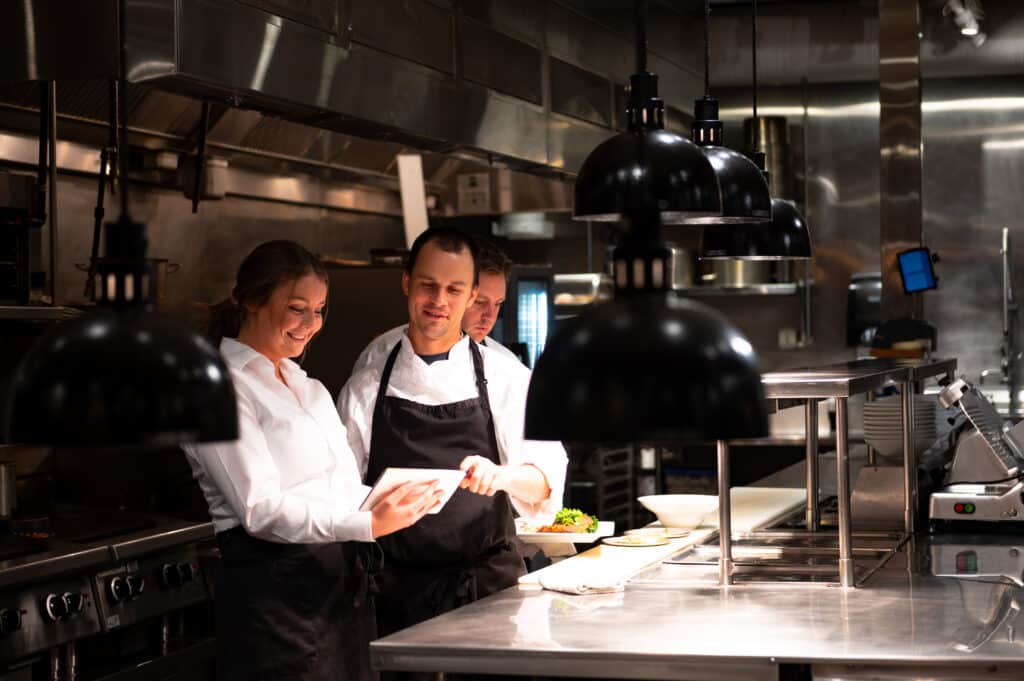
Restaurant operators are turning to accountability platforms to sharpen performance and profitability, without falling into the trap of micromanagement. These systems automate task tracking, compliance reporting, and operational oversight, allowing managers to lead through clarity and data-driven insights rather than daily check-ins.
By connecting finance, inventory, and workforce tools, accountability platforms show operators exactly what’s working, what needs attention, and how to fix it.
The following overview spotlights the leading platforms that help restaurants of every size maintain high standards, streamline workflows, and empower teams to deliver consistent results.
Before diving into specific platforms, you should understand the core capabilities that define effective accountability software. These features create transparency while reducing administrative effort.
Restaurant365 stands out as the enterprise-grade platform purpose-built for multi-unit restaurant finance and operations. Its all-in-one approach unifies accounting, payroll, scheduling, and inventory in a single, automated environment. Every task—from invoice management to labor forecasting—feeds into one connected data set, driving accountability across departments.
For operators seeking a complete restaurant enterprise management solution, Restaurant365 delivers unified visibility and control. Schedule a free demo to see how it works for your operation.
Lightspeed Restaurant combines POS precision with robust analytics, focusing especially on table-service and full-service operations. It gives managers immediate insight into item-level profitability, staff performance, and menu trends, letting them guide improvement through data instead of supervision.
The system’s dashboard highlights shifts in sales mix, net margins, and guest habits—prompting outcome-oriented conversations instead of micro oversight. Lightspeed’s plans start near $189 per month for the Essential package and reach $399 for Premium, appealing to growth-minded operators who value deep reporting and customizable floor management tools.
However, Lightspeed focuses primarily on POS and front-of-house analytics. For operators who need unified back-office accounting, payroll, and inventory management alongside operational oversight, Restaurant365 provides a more comprehensive solution.
Avero serves as a specialized analytics and benchmarking platform for restaurateurs managing multiple locations. Benchmarking tools compare performance across stores and industry norms, helping leaders identify outliers quickly. Avero’s insight engine turns raw data into meaningful metrics—like revenue per guest or labor cost as a percent of sales—so managers can hold teams accountable for outcomes instead of daily behaviors.
Labor productivity tracking is a core strength, correlating staff schedules, sales patterns, and guest feedback into clear performance scores. For regional chains, it’s an essential reporting layer, offering a hands-off route to consistent results and cost-efficient staffing.
While Avero excels at analytics, it requires integration with separate accounting and payroll systems. Restaurant365 combines these analytics capabilities with full financial management in one platform.
Jolt simplifies store-level accountability by automating daily checklists, temperature logs, and compliance tasks that commonly drain manager time. Core modules include:
Jolt connects with IoT sensors for real-time food safety verification, instantly logging temperatures and corrective actions. For multi-location operators, the system enables remote auditing and uniform standards enforcement—without requiring supervisors to be on-site.
Starting around $99 per month, Jolt offers an affordable entry point for compliance automation. For operators who also need integrated accounting, scheduling, and inventory management, Restaurant365 provides these capabilities alongside compliance tools.
FoodDocs automates HACCP processes and compliance recordkeeping so restaurant teams can stay audit-ready with minimal manual input. This HACCP automation platform continuously documents safety checkpoints, logs proof photos, and triggers alerts for deviations from temperature or hygiene thresholds.
Real-time dashboards visualize compliance rates by store and shift, ensuring accountability for every team member. Starting around $199 per month, FoodDocs is particularly suited to high-volume restaurants that manage detailed food safety plans or face multiple audits per year.
Jotform Apps offers a quick, no-code approach to building digital checklists and forms tailored to restaurant workflows. With over 40 restaurant-specific templates, operators can rapidly configure opening and closing checklists, shift reports, and equipment maintenance forms.
While it supports mobile data collection and easy deployment, Jotform Apps lacks the deep analytics and benchmarking of enterprise tools unless connected to BI or reporting systems. It’s ideal for independent operators or expanding concepts that want to digitize procedures fast before scaling into larger platforms like Restaurant365.
Micromanaging—constant monitoring and interference in staff duties—creates bottlenecks and erodes trust. Accountability platforms reverse that dynamic through automation. Features like digital checklists, shift self-service, and variance alerts allow teams to self-correct instantly.
In integrated systems, a variance in food cost automatically triggers an investigation task in the manager logbook. Labor overages prompt optimized schedule suggestions.
The result is a culture where visibility and automation handle everyday oversight—freeing managers to coach, strategize, and grow. Platforms like Restaurant365 exemplify this approach, where data-driven insight connects operations and accounting so managers focus on improvement, not inspection.
For best results, accountability platforms should embed directly into core operational systems. Integration touchpoints typically include:
Choosing platforms with native connections minimizes manual reentry and ensures immediate alerts when performance deviates from expected thresholds. Native integrations yield faster response times and a clearer return on investment.
Restaurant365’s unified architecture eliminates silos between these systems, providing a single source of truth for every cost center. Learn more about 12 restaurant operational challenges and opportunities for 2026.
For controllers and operations leaders overseeing multi-location brands, scalable accountability depends on consolidated reporting, audit workflows, and variance monitoring.
Full-suite solutions like Restaurant365 typically deliver enterprise visibility across every store, while point tools like Jolt or FoodDocs enhance frontline precision. Multi-unit operators may favor enterprise suites because scale pricing offsets higher onboarding investments and professional customization.
The key is ensuring real-time data exchange and centralized control—so accountability lives in the data, not in constant managerial oversight. Restaurant365’s Restaurant Enterprise Management platform is designed for this balance, combining controls and insight within one connected system.
View Restaurant365 to find the right plan for your operation.
A successful rollout depends on structured onboarding and consistent reinforcement. Proven steps include:
With steady refinement, restaurants typically see measurable improvements in cost control, team ownership, and employee satisfaction within the first quarter post-launch. Platforms designed for restaurant operations, such as Restaurant365, simplify this process with onboarding resources and integrated training support.
The most effective accountability platforms include automated checklists, real-time analytics, and compliance logs that promote accuracy and transparency without direct supervision. Restaurant365 combines these functions within a unified operational and financial system.
They minimize micromanagement by automating tasks, sending real-time alerts, and enabling staff self-service, allowing managers to focus on strategy and coaching.
Yes. These tools highlight cost variances and trigger corrective actions, empowering managers to manage expenses proactively. Restaurant365’s variance tracking tools connect those insights directly to P&L outcomes.
Yes. Most modern systems offer consolidated dashboards and standardized workflows for scalable oversight across locations. Restaurant365 scales from single concepts to enterprise groups.
They automate HACCP logs, food safety reporting, and corrective-action tracking, helping teams stay audit-ready with less manual effort.
Variance reporting is the automated detection of deviations from expected food or labor costs. When actual costs exceed budgeted amounts, the system flags the discrepancy and can trigger corrective actions.
Ready to see how accountability automation can transform your restaurant operations? Schedule a free demo to explore Restaurant365.
Blog Menu
Share this blog:
See why more than 50,000 restaurants use Restaurant365
Restaurant365 brings together accounting, operations, scheduling, and more in a flexible platform—empowering restaurants to choose the solutions they need and scale with confidence.