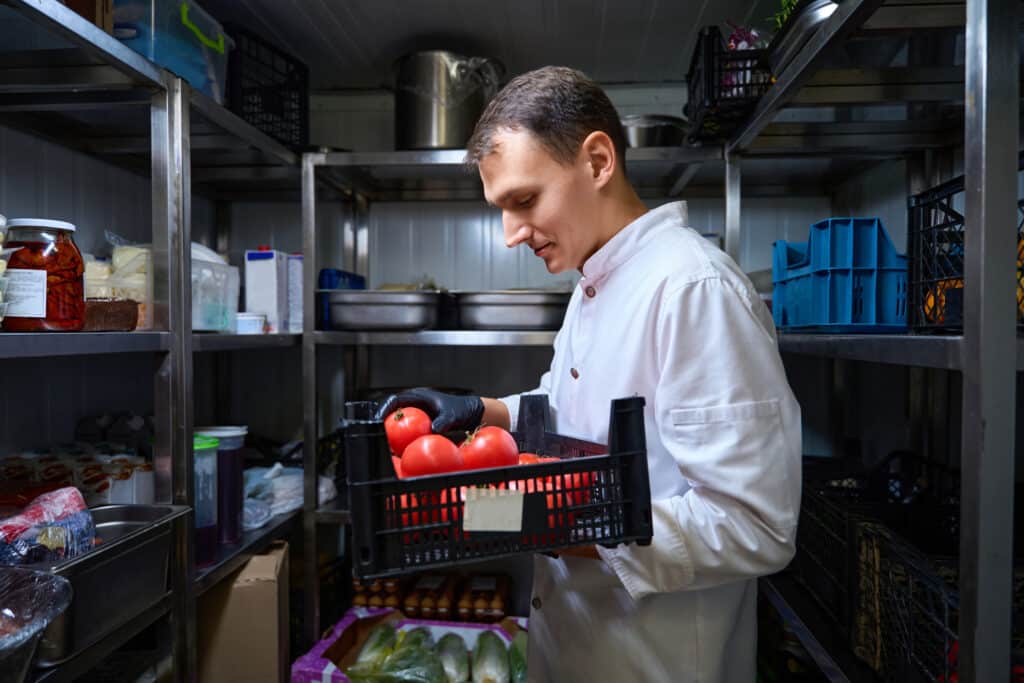
Fast casual restaurant chains operate in one of the most demanding segments of the food service industry. The model demands speed, consistency, and quality simultaneously — across every location, every shift, every day. As the segment matures and competition tightens, the chains that sustain growth are the ones that build operational infrastructure to match their ambition.
This guide covers the operational and technology decisions that define fast casual chain performance and what operators need to manage at scale.
The fast casual model sits between quick service and casual dining on every meaningful dimension: price point, ingredient quality, service speed, and operational complexity. That positioning creates a specific set of operational demands that chains have to manage simultaneously.
Speed of service has to be consistent regardless of volume. Unlike quick-service chains, fast casual brands compete on quality — and that quality expectation applies whether a guest visits one location or fifty. Maintaining that consistency across a growing footprint is not a branding challenge. It is an operational and systems challenge.
Labor intensity is also higher than quick service. Made-to-order prep, longer training timelines, and more complex kitchen workflows mean labor cost management requires more precision. When scheduling is disconnected from sales forecasts, or when managers lack real-time visibility into labor as a percentage of sales, the margin for error is narrow and the cost of getting it wrong compounds quickly.
Want a deeper look at how fast casual operators manage prime cost at scale? The Restaurant365 guide to restaurant profitability covers the full picture.
Run every location like your best location.
See how Restaurant365 helps fast casual chains scale with consistency.
Growing a fast casual chain from five locations to fifty exposes problems that were manageable at smaller scale. The systems and processes that worked early become liabilities as the footprint grows.
When each location produces its own reporting in a disconnected system, leadership cannot get a consolidated, apples-to-apples view of performance across the chain. Comparing food cost, labor cost, and prime cost across locations requires manual data assembly, which means the number is always stale by the time it is ready to act on.
At scale, even minor discrepancies in inventory create significant financial exposure. A portioning variance or a supplier price increase that goes undetected for two weeks costs far more across 30 locations than it would at one. Without recipe-level costing connected to live purchasing data, operators cannot identify where food cost variance is originating fast enough to respond.
Scheduling decisions made without reference to sales forecasts produce labor cost that is either too high — overstaffed on slow shifts — or too low, creating service gaps during peak periods. At scale, that mismatch across dozens of locations adds up to real money in both directions.
Every new location that opens without standardized systems, training, and reporting infrastructure introduces variance into the chain. Managers who learn different processes, run different reports, or track costs differently produce data that cannot be compared meaningfully to the rest of the organization.
Manual accounts payable processing, bank reconciliations, and financial close work that scales with location count eventually outpaces what a back-office team can manage without adding headcount. Chains that do not automate these workflows hit a ceiling where growth creates administrative cost faster than it creates revenue.
The technology requirements of a fast casual chain are different from those of a single-location independent. The platforms that support a chain have to work consistently across every location, produce data that can be consolidated and compared, and scale without requiring significant additional infrastructure as the footprint grows.
Restaurant365 is an all-in-one platform built specifically for restaurant operators, including fast casual chains scaling across multiple locations. It connects accounting, inventory and purchasing, workforce management, and payroll in a single system, so chain operators are not managing separate platforms or manually reconciling data between them.
With Restaurant365, fast casual chain operators can:
The most common challenges are maintaining food cost and quality consistency across locations, managing labor as the footprint grows, producing consolidated financial reporting without manual data assembly, and onboarding new locations to standardized systems quickly. Each of these problems scales with location count — they are manageable at five locations and genuinely difficult at fifty.
The foundation is a POS system that feeds back-office operations automatically, an inventory and recipe management system connected to live purchasing data, scheduling tools built on sales forecasts, and an accounting platform that produces multi-location P&L without manual consolidation. Platforms that connect all of these in a single system significantly reduce the operational overhead of managing the stack.
Effective food cost management at a chain requires recipe-level costing connected to live ingredient pricing, weekly inventory counting at every location, and actual-versus-theoretical comparison that surfaces variance by item and location. Chains that only track food cost as a percentage of total sales miss the item-level and location-level detail needed to identify where problems are originating.
Labor is typically the second-largest cost in a fast casual operation after food. Scheduling decisions made without reference to sales forecasts produce either overstaffing — which erodes labor cost percentage — or understaffing, which creates service gaps and negatively affects the guest experience. At chain scale, even small per-location improvements in labor efficiency have a significant impact on overall profitability.
Restaurant365 connects accounting, inventory, workforce management, and payroll in a single platform built for restaurant operators. For fast casual chains, the platform provides standardized systems that can be deployed consistently across every location, multi-location financial reporting that does not require manual consolidation, and back-office automation that allows chains to grow without proportionally growing their accounting team.
See how fast casual chains run smarter with Restaurant365.
Black Rock Coffee Bar has grown from a single drive-thru in Beaverton, Oregon to more than 160 corporate-owned locations across seven states. As the brand scaled aggressively, VP of Learning and Operations Services Heather Kluzak recognized that the systems supporting store teams had to evolve just as quickly as the footprint.
Before Restaurant365, Black Rock counted inventory once per month using Excel spreadsheets. The monthly cadence meant leadership was always reviewing results after the fact — with limited ability to identify shifts in usage, waste, or product movement quickly enough to act on them.
“Prior to R365, we had limited visibility into our spend at the store level. We knew there were opportunities to improve our cost of goods, but the data wasn’t always easy to access or analyze quickly.” — Heather Kluzak, VP of Learning and Operations Services
After implementing Restaurant365, Black Rock shifted from monthly to weekly inventory counts across all locations. Managers could review actual versus theoretical usage, identify missing invoices or missed items, and make corrections immediately rather than weeks later. Detailed recipes and modifiers — including size variations and customizations — were built directly into the system so theoretical usage reflected real-world ordering behavior. New locations were brought onto Restaurant365 from day one, completing a full opening inventory before ringing their first sale and joining the weekly count cadence immediately.
“We decided to go with a weekly cadence to really give us the true information that we needed so that we could be proactive, week over week, instead of again waiting till the end of the month to figure out what was missing or where we overspent.” — Heather Kluzak, VP of Learning and Operations Services
Results:
“I really feel like we’re set up to scale and scale quickly. We have certainly implemented systems that are scalable, and everything that we look at is through a lens of scalability.” — Heather Kluzak, VP of Learning and Operations Services
See how Restaurant365 helps fast casual chains build the operational infrastructure to scale. Get a free demo of R365.
Blog Menu
Fast casual chain operations are demanding by design. The model requires speed, consistency, and quality at every location — and the systems that support it have to be built for that standard.
Restaurant365 connects accounting, inventory, workforce, and payroll in a single platform built for the way fast casual chains actually operate. Get a free demo to see how it can work across your locations. Get a free demo today.
Share this blog:
See why more than 50,000 restaurants use Restaurant365
Restaurant365 brings together accounting, operations, scheduling, and more in a flexible platform—empowering restaurants to choose the solutions they need and scale with confidence.