Fast food and quick service restaurants demand employees who can work efficiently, consistently, and collaboratively. Training in this sector is not merely an orientation process; it’s a carefully curated system designed to prepare employees for the unique challenges of the industry.
From flipping burgers to managing complex point-of-sale systems, the training methodologies employed by fast food restaurants are tailored to ensure that staff can uphold brand standards, maintain food safety, and deliver exceptional customer experiences under pressure. The emphasis lies on hands-on learning, repetition, and standardized procedures to foster mastery in a short timeframe.












The effectiveness of staff training hinges on a blend of theoretical instruction and practical application. Here are strategies that fast food restaurants often implement to ensure their training programs are impactful:

A fast food training manual serves as the blueprint for operational excellence. It should encapsulate every aspect of the job, providing clear, concise, and actionable instructions. Key components include:

A food handler certification course is an essential credential for fast food employees, focusing on critical aspects of food safety and hygiene.
These courses, often mandated by local health authorities, cover topics such as:
Completion of this certification not only ensures regulatory compliance but also underscores an employee’s commitment to maintaining high standards of food safety.
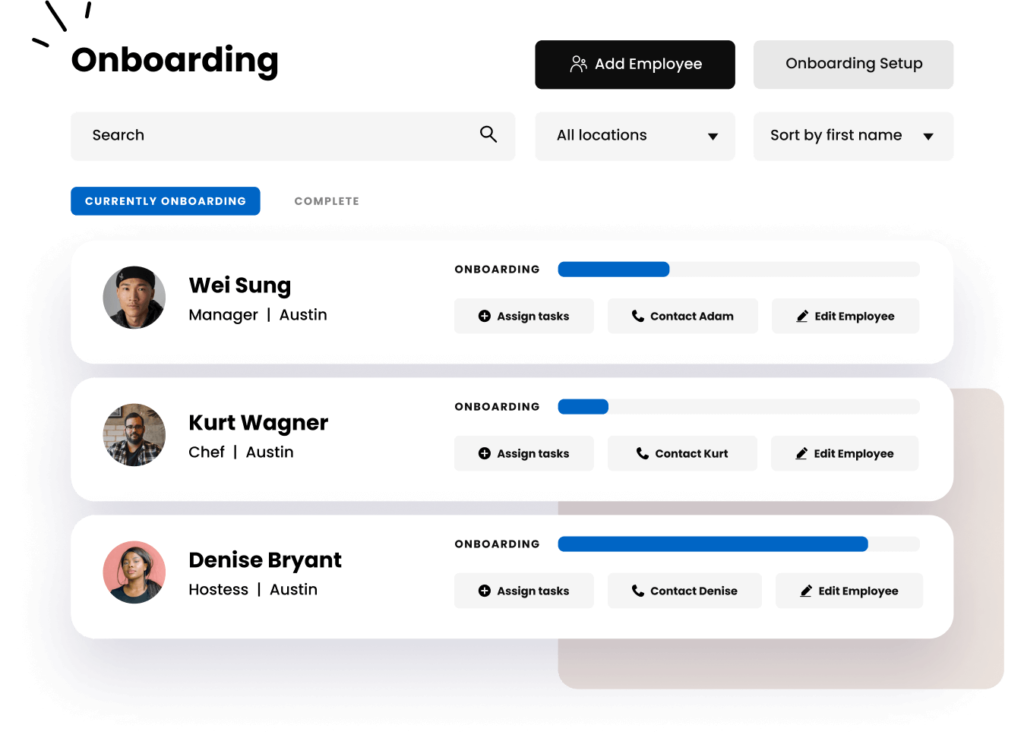
The onboarding process is an employee’s first impression of the organization, and it sets the tone for their journey within the company. Effective onboarding combines administrative setup with an engaging introduction to the workplace culture.
A mix of real-time mentorship, simulated practice scenarios, and gradually increasing task complexity works best — paired with gamified incentives and regular refresher courses to keep skills current.
At minimum: an introduction to the brand and its service philosophy, detailed role descriptions, step-by-step operational procedures, food safety and emergency protocols, customer interaction guidance, and clear performance benchmarks.
Most local health authorities require it. The certification covers handwashing and glove protocols, safe storage and temperature control, cross-contamination and allergen management, and sanitizing procedures — and it signals an employee’s commitment to food safety standards.
Start with preboarding logistics (paperwork, uniforms, materials ready in advance), a warm first-day welcome, a structured walkthrough of policies and expectations, hands-on training that builds from simple to complex tasks, and a designated mentor for ongoing support.
A disorganized first day signals a disorganized workplace. Employees who get a warm welcome, clear expectations, and a mentor to lean on are more likely to stay engaged and committed past the first few weeks.
Training employees in the fast food industry is a meticulous process that balances efficiency with thoroughness. By investing in well-structured training manuals, innovative teaching methods, and comprehensive onboarding programs, fast food restaurants can cultivate a workforce that is skilled, motivated, and aligned with the brand’s ethos.
Share this blog:
See why more than 50,000 restaurants use Restaurant365

Restaurant365 brings together accounting, operations, scheduling, and more in a flexible platform—empowering restaurants to choose the solutions they need and scale with confidence.