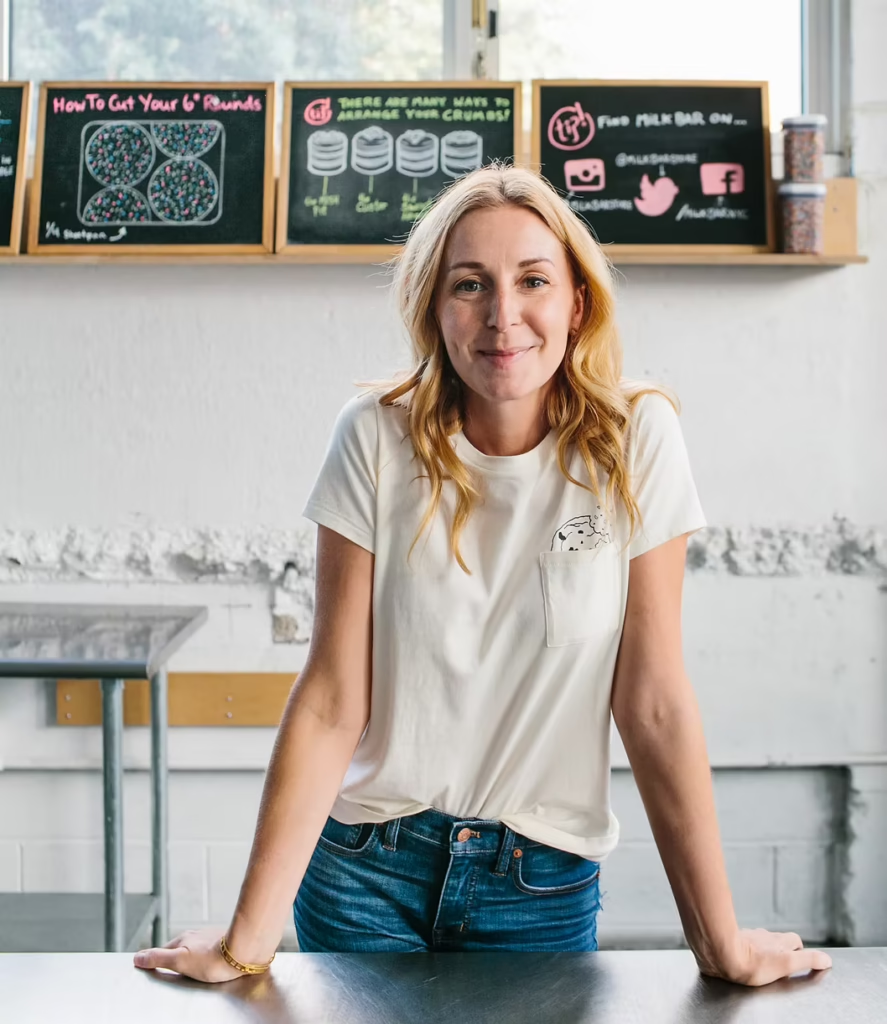
Why a pastry founder belongs on a tech stage
On paper, a dessert brand founder headlining a back-office software conference might read as a mismatch. In practice, it’s exactly the point. Tosi’s story is a case study in the two forces that define modern restaurant success: creativity and discipline.
“Running a restaurant takes creativity, but it also takes discipline,” said Tony Smith, CEO and Co-Founder of Restaurant365. “Christina knows what it takes to build something people love and keep improving the business as it grows. That’s the perspective we want at Transform. Operators are trying to understand where AI can actually help, and they want practical ideas that lead to better decisions and healthier margins.”
That tension—invention versus operational rigor—lands at a hard moment for the industry. Food and labor costs remain elevated, consumer habits keep shifting, and technology is evolving faster than most teams can evaluate it. Operators have to decide what’s worth trying, what will genuinely help their teams, and how to change without losing sight of the guest.
AI and the widening profitability gap
Transform is built around tangible lessons from operators who have actually tried new approaches and lived with the results. This year, artificial intelligence is squarely in that conversation—because the payoff is now showing up in performance data.
Restaurant365’s State of the Restaurant Industry Mid-Year Report points to a growing Restaurant Profitability Gap between operators who use AI and those who haven’t adopted it yet. Among active AI users:
- 62% report lower labor costs
- 61% report lower food costs
Those are the two line items that make or break a restaurant P&L—and the message to holdouts is getting harder to ignore.
What’s on the Transform 2026 agenda
Across more than 30 sessions and five learning tracks, attendees will hear from leading restaurant operators, Restaurant365 experts, and industry partners. The agenda covers where AI is delivering real results, how restaurants are managing food and labor performance, and what leaders are doing to build stronger businesses.
Beyond the sessions, the conference includes:
- Hands-on learning workshops
- A vendor showcase
- The Restaurant365 Solutions Bar
- Dedicated time to connect with peers and swap what’s actually working
Why it matters
For restaurant owners, multi-unit operators, and foodservice executives, this is more than a celebrity keynote booking—it’s a signal about where competitive advantage is moving. When 6-in-10 AI adopters report lower food and labor costs, the “wait and see” posture starts to carry a real cost of its own. The profitability gap isn’t theoretical; it’s compounding on every invoice and every schedule.
The practical takeaway: operators should treat AI in the back office the way they’d treat any margin lever—test it against your own numbers, focus on the two costs that move the needle (food and labor), and adopt what demonstrably helps your team rather than chasing hype. Tosi’s angle—growing a brand with discipline behind the creativity—is the complementary lesson. Structure is what lets a good concept scale without losing the guest experience that made it work.
Even if you’re not in Scottsdale in November, the framing is worth borrowing: decide deliberately what to try, measure whether it helps your people, and protect the guest through every change.
Register and learn more
To learn more and register for Transform 2026, visit transform.restaurant365.com.
Following Christina Tosi’s latest moves? See how Milk Bar and Beyond Meat brought back savory with two plant-forward bakery hits. And for another operator-focused competition worth watching, check out the PR%F Awards’ 8th annual buyer-judged spirits, wine and beverage competition.
Is AI already changing your food and labor costs—or are you still on the fence? Tell us where you stand in the comments.