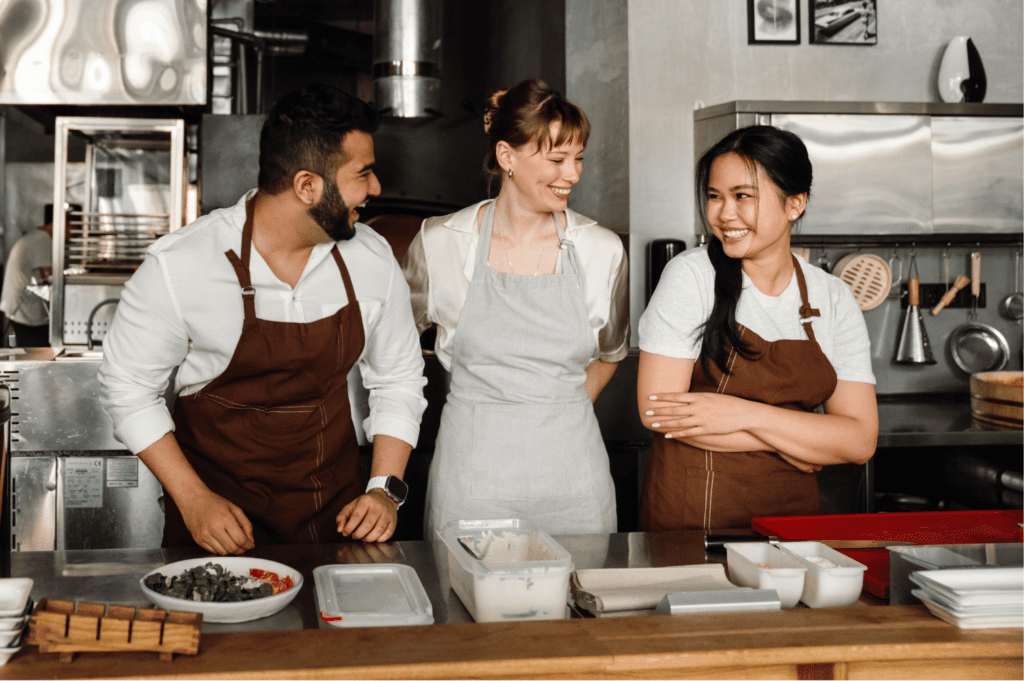
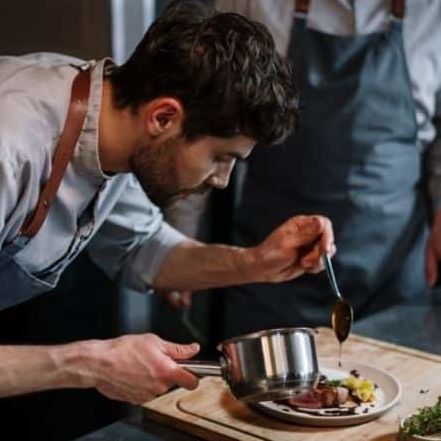
Casual dining restaurant chains operate in one of the most demanding segments of the food service industry. The model requires full-service hospitality, consistent food quality, and competitive pricing simultaneously, across every location, every shift, every day. As the segment matures and guest expectations rise, the chains that sustain growth are the ones that build operational infrastructure to match their ambition.
A casual dining restaurant chain is a full-service food and beverage operation that serves guests at the table, typically with a broad menu, moderate price points, and a defined brand experience that must be replicated consistently across every location. The segment sits between quick service and fine dining, which means it inherits the volume demands of the former and the hospitality standards of the latter.
What makes casual dining chains operationally distinct is the complexity of each location. Full-service labor models, multi-section floor plans, bar programs, complex menus with high ingredient counts, and table turn management all create a level of operational and financial detail that simpler concepts do not face. When you multiply that complexity across five, ten, or fifty locations with different volumes, different markets, and different teams, the need for connected systems becomes acute.
Casual dining chains also tend to operate multi-concept portfolios more frequently than other segments. A group that started with one casual dining brand often adds concepts as it grows, which introduces multi-entity accounting, intercompany transactions, and consolidated reporting requirements that most generic business software handles poorly.
Turn every location’s data into a competitive advantage for your casual dining chain.
See how Restaurant365 helps.
The casual dining segment sits at the intersection of several cost pressures that compound as a chain grows.
Labor is the most significant. A full-service dining room requires servers, bussers, hosts, bartenders, kitchen staff, and management at every location, all with variable hours, tip structures, and compliance requirements that change by state. Labor typically represents 30 to 35 percent of revenue for casual dining operators, and managing it well requires scheduling tools connected to real sales forecasts, time tracking tied directly to payroll, and above-store labor reporting that gives leadership visibility across every location in real time.
Food cost is the other half of the prime cost equation. Casual dining menus are typically broader and more ingredient-intensive than quick service, which means more SKUs to manage, more vendor relationships to maintain, and more opportunities for food cost variance to go undetected. A portioning issue at one location or a vendor price change that was not caught at receiving can quietly erode margins for weeks before it shows up in a P&L report.
Guest experience is the third pressure point. Casual dining guests have higher service expectations than quick service guests and more price sensitivity than fine dining guests. The brand promise has to be delivered consistently at every location, which requires standardized procedures, trained and accountable staff, and management tools that surface problems before guests notice them.
As chains scale, all three of these pressures compound. More locations mean more complexity, more data to manage, and more opportunities for variance to hide before it becomes a material financial problem. The chains that navigate this well do so by building connected operational infrastructure early, before the manual processes that worked at three locations become genuinely unsustainable at ten.
Want to see how multi-unit casual dining operators are using technology to scale without losing operational control? Watch Leveraging Technology and Data for Enterprise-Level Success to hear how connected accounting, inventory, and operations data helps growing chains make faster, more profitable decisions across every location.
Restaurant-specific accounting is the foundation of every other operational decision a casual dining chain makes. When accounting is accurate, current, and connected to operations, leaders can manage costs proactively. When it is not, decisions are made on data that is always a few steps behind reality.
The most important accounting capabilities for a growing casual dining chain are period-based reporting that aligns with how restaurants track performance, automated POS journal entries that eliminate daily manual data entry, intercompany accounting for groups managing multiple entities, and multi-location P&L consolidation that gives above-store leaders a real-time view of financial performance across every location without logging into each system separately.
AP automation is equally important. Casual dining chains with broad menus deal with high volumes of vendor invoices every week. When those invoices are processed manually, overcharges go undetected, the financial close takes longer than it should, and your accounting team spends the majority of their time on data entry rather than analysis that could actually improve profitability.
Inventory management in casual dining is uniquely complex because of menu breadth. A casual dining concept might carry hundreds of ingredients across a menu that changes seasonally, which means more purchase orders, more receiving records, more vendor relationships, and more opportunities for cost to drift without anyone catching it.
The most effective casual dining chains manage inventory at the ingredient level, with recipe costs tied to live purchasing data that update automatically when vendor prices change. Theoretical versus actual food cost tracking at the location level is what separates chains that catch food cost problems in days from those that discover them at month end when the margin is already lost.
Purchasing and receiving workflows that connect to accounting are equally critical. When approved vendor catalogs enforce consistent pricing across every location and three-way matching automatically compares invoices to purchase orders and receiving records, overcharges are caught before they are paid rather than discovered in a manual audit weeks later.
Labor is the largest controllable cost in casual dining, and the full-service model creates scheduling complexity that quick service chains simply do not face. Managing servers by section, coordinating kitchen stations, scheduling bar staff around different day parts, and ensuring compliance across multiple states all require tools purpose-built for the restaurant environment.
Sales forecast-based scheduling is the most direct way to reduce labor cost variance. When schedules are built against projected demand rather than last week’s template, overstaffing on slow shifts and understaffing on busy ones become measurably less frequent. AI-powered scheduling tools that flag overtime risk before the schedule is published give managers the opportunity to correct staffing decisions before the cost is locked in.
Time and attendance tracking connected directly to payroll eliminates the manual reconciliation that produces paycheck errors and erodes employee trust. In an industry where turnover is already a significant operational challenge, accurate and on-time pay is one of the most direct retention tools an operator has.
Restaurant-specific payroll handles the tip structures, multi-rate pay, and compliance requirements that generic payroll platforms consistently handle with manual workarounds. For a casual dining chain with tipped employees across multiple states, getting payroll right is not just an accounting function. It is a compliance requirement and a retention strategy.
Tip automation that handles tip pool calculations, tip credits, and tip reporting automatically is one of the highest-value payroll features a casual dining chain can invest in. The manual work of calculating and distributing tips across a full-service team is significant, and the compliance exposure of getting it wrong is real.
Hiring and onboarding tools that connect directly to scheduling and time tracking eliminate the manual re-entry that slows down new hire setup and produces first-shift errors. In a high-turnover segment, reducing time to first productive shift is a direct operational benefit.
For casual dining chains managing multiple locations, above-store reporting is what transforms operational data into strategic decisions. When every location’s food cost, labor cost, and financial performance flows into a single consolidated view, above-store leaders can identify which locations are outperforming, which need attention, and what the highest-leverage corrective actions are.
AI-powered dashboards that surface anomalies automatically take that visibility a step further. When a food cost variance at one location is flagged before the period closes, the conversation moves from explaining what happened to fixing what is happening. That shift is the difference between reactive and proactive chain management.
Most casual dining chains encounter a version of these challenges as they grow. The cost of not addressing them compounds with every location added.
The technology platform a casual dining chain runs on determines how much of its leadership’s time goes to managing systems versus managing the business. When accounting, inventory, scheduling, and payroll are disconnected, the time spent moving data between them, reconciling discrepancies, and waiting for reports to catch up with reality is time that cannot go toward the decisions that actually move the business forward.
A connected platform changes that. When POS data flows automatically into accounting, your daily P&L is always current. When recipe costs are tied to live purchasing data, your food cost percentage is always accurate. When scheduling connects to sales forecasts and time tracking flows directly into payroll, labor cost is visible in real time rather than a line item that surprises you after the period closes.
For casual dining chains scaling across multiple locations, that connectivity also creates the consistency and accountability that makes performance management at scale possible. When every location is working from the same recipe standards, the same scheduling tools, and the same reporting benchmarks, performance comparisons are meaningful and corrective action is faster because the data tells you exactly where to look.
HOUSEpitality Family is a Richmond, Virginia-based multi-concept casual dining group operating eight locations across three distinct concepts: The Boathouse, Casa del Barco, and Island Shrimp Company. Founded in 1988 as a single restaurant, the group grew steadily, and by the time it had reached five locations, CFO Colin Healy recognized that the systems in place were not built to support where the business was headed.
The operation was running on Peachtree accounting software that Healy described as clearly not designed for the restaurant industry. Customizing reports to relate food costs to food sales was impossible. Managers at each location compiled paper invoices into three-inch stacks every week and sent them to accounting by courier, where the team manually keyed every line item. Seven separate logins were required just to access accounting data across the entities. And when crab prices increased, the accounting team had no reliable way to see the impact in real time.
The disconnect between what accounting could show and what operations actually needed to manage costs across a growing multi-concept casual dining group was one of the most significant limitations the business faced.
After implementing Restaurant365, HOUSEpitality gained a single connected platform where accounting, inventory, purchasing, and financial reporting all worked from the same data. POS integration eliminated manual data exports. Line-item ingredient cost detail that had never been visible before became accessible in real time. And the financial close went from a multi-day manual exercise to something that happened accurately and on time every period.
With Restaurant365, HOUSEpitality Family saw improvements including:
The shift gave HOUSEpitality something their previous systems never could: a single source of truth that connected accounting to operations and gave every level of the organization the data to make better decisions.
“If you want to take control of your costs and your accounting, then Restaurant365 is the right solution for you.” — Colin Healy, CFO, HOUSEpitality Family
HOUSEpitality saved 40 hours a week and cut food costs by 1% across eight locations by replacing disconnected systems with one platform built for casual dining at scale. See how Restaurant365 can help you do the same.
✅ Purpose-built restaurant accounting with period-based reporting, automated POS journal entries, and multi-location P&L consolidation native to the platform
✅ Recipe costing and inventory management connected directly to purchasing and financial reporting for real-time food cost visibility across every location
✅ Workforce management and scheduling tied to sales forecasts and payroll so labor cost is managed proactively rather than reactively
✅ AI-powered dashboards that surface food cost anomalies, labor variances, and operational exceptions automatically without manual analysis
✅ Lower upfront cost and familiar interface for teams already using platforms like QuickBooks
❌ Not built for restaurant workflows, requiring manual workarounds for POS integration, recipe costing, and period-based reporting
❌ Multi-location P&L consolidation and intercompany accounting require significant manual effort that grows with every location added
❌ No native connection between accounting, inventory, labor, and purchasing data
✅ Individual tools can be strong within their specific function
❌ No single source of truth, requiring manual data compilation every time a cross-functional report is needed
❌ Integration between tools is often limited, inconsistent, or requires manual exports that introduce errors and lag
❌ Scaling requires adding more tools and more complexity rather than building on a unified foundation that handles growth natively
A casual dining chain needs POS integration that feeds back-office systems automatically, restaurant-specific accounting with period-based reporting and multi-location P&L consolidation, recipe costing tied to live purchasing data, forecast-based scheduling, and above-store reporting that gives leadership real-time visibility across every location. The most effective approach connects all of these functions in a single platform rather than managing them across disconnected tools.
Prime cost is the sum of food cost and labor cost, typically expressed as a percentage of revenue. For casual dining chains, prime cost is the single most important profitability metric because food and labor together represent 55 to 65 percent of revenue. Managing prime cost effectively requires food cost and labor data to be in the same system and updated in real time, which is only possible when accounting, inventory, and workforce management are connected.
The most effective approach is connecting recipe costs to live purchasing data so theoretical food cost is always current, tracking actual versus theoretical food cost by location automatically, and using three-way matching to catch vendor overcharges before they are paid. When these functions are connected in the same platform, food cost variance is visible in days rather than weeks.
The most consistent challenge is that systems that work at three locations break at ten. Manual processes that were manageable at a small scale become genuinely unsustainable as location count grows. The chains that scale successfully address this by building connected operational infrastructure before the manual workarounds become a material drag on the business.
Restaurant-specific accounting includes period-based reporting, automated POS journal entries, recipe-level food cost tracking, intercompany accounting for multi-entity groups, and multi-location P&L consolidation that general platforms require significant manual workarounds to replicate. For casual dining chains with full-service operations, complex menus, and multiple concepts, these restaurant-specific features are foundational rather than optional.
Above-store reporting for a casual dining chain should consolidate food cost, labor cost, and financial performance across every location in a single view without requiring manual data assembly. AI-powered dashboards that surface anomalies automatically give above-store leaders the ability to identify which locations need attention before problems compound rather than after the period closes.
Yes. Restaurant365 is built to manage multiple concepts and multiple entities under one platform, with separate P&Ls for each concept and consolidated reporting across the entire group. That makes it possible to compare performance across concepts, manage intercompany transactions, and give each concept’s leadership team the location-level visibility they need without requiring separate systems for each brand.
Forecast-based scheduling builds shifts around projected sales rather than repeating last week’s template, which reduces overstaffing on slow shifts and understaffing on busy ones. When scheduling is connected to time tracking and payroll in the same platform, labor cost is visible in real time throughout the week rather than only after the period closes.
Turn disconnected systems into one connected casual dining chain.
See how Restaurant365 helps.
Casual dining chains that move from disconnected systems to a connected platform consistently report improvements across cost control, operational consistency, and the speed of financial decision-making.
Lower food costs: “Once we had line-item ingredient cost detail connected to our accounting in real time, we could catch vendor price increases as they happened and act on them before significant margin was lost.”
Massive time savings: “We saved 40 hours a week in accounting work by eliminating manual invoice processing and the data entry we used to do by hand.”
Faster financial close: “Bank reconciliation went from a time-consuming manual exercise to something that happens automatically with zero discrepancies.”
More scalable growth: “Adding new locations is manageable now because the accounting and inventory infrastructure is already built to handle the complexity. We are not starting from scratch every time we open a new concept.”
Real-time visibility across every location: “For the first time, we could see what every location was spending on ingredients in real time and have data-backed conversations with vendors about pricing.”
Blog Menu
Read More:
See why more than 50,000 restaurants use Restaurant365
Casual dining chains are built on hospitality, consistency, and the ability to deliver a great guest experience across every location every shift. The systems behind the scenes determine whether that is possible to sustain as the chain grows.
Restaurant365 connects accounting, inventory, workforce management, and payroll in one platform built specifically for restaurant and food service operators, so casual dining chains have the operational infrastructure to scale without the manual complexity that slows most growing groups down.
Your next location should make your operation stronger, not harder to manage. Get a free demo and see what a connected casual dining chain looks like with Restaurant365.
Share this blog:
See why more than 50,000 restaurants use Restaurant365
Restaurant365 brings together accounting, operations, scheduling, and more in a flexible platform—empowering restaurants to choose the solutions they need and scale with confidence.