Operators who grow revenue sustainably are not running a new promotion every week. They are running a tighter operation that converts every available dollar of demand into profit.
This guide covers the strategies operators use to increase restaurant sales, the metrics that matter most, and how the right operational infrastructure makes all of it more effective.

Most conversations about growing restaurant sales start with marketing like promotions, loyalty programs, social media. Those tools matter, but the operators who consistently increase revenue are solving a more fundamental problem first: They know exactly what is driving their current sales, where the gaps are, and what levers they can pull without damaging margins.
When prime cost runs 60 to 70% of sales, there is almost no buffer. A two-point swing in food or labor can erase profitability for the week or the month. That means revenue growth that drives up costs at the same rate produces no real financial improvement. The goal is not just more sales; it is more profitable sales.
Operators who increase restaurant sales effectively do two things simultaneously: they create conditions that grow the top line, and they maintain the operational discipline to ensure margin follows. That requires data, not instinct.
Looking to understand how sales connect to overall profitability? The Restaurant Profitability Playbook for 2026 covers the full picture.
Understanding the landscape starts with knowing which levers actually move revenue and which ones are worth the operational cost of pulling them.
Your menu is your primary sales tool. Menu engineering is the process of analyzing which items are both popular and profitable, then using that information to drive purchasing behavior. Items that are high in both popularity and contribution margin should be featured prominently and protected from unnecessary discounting. Items that are popular but low margin are candidates for recipe or pricing adjustment. Items that are neither popular nor profitable are candidates for removal.
The critical input is data. Menu engineering only works when operators have accurate, item-level contribution margin data connected to real sales volume, not estimates. When that data flows automatically from the POS into a reporting platform, menu decisions are based on what is actually happening, not what operators assume is selling.
Tip: Track your top ten items by both sales volume and contribution margin on a weekly basis. The gap between what sells most and what generates the most profit is where the most actionable menu opportunities live.
Growing the average amount each guest spends is one of the highest-return sales strategies available to operators because it requires no additional traffic. Staff training on suggestive selling, thoughtful menu design that guides guests toward higher-margin items, and bundling or combo structures are the primary tools.
The metric to track is average check per cover, broken down by daypart and server where possible. When average ticket data is visible at the location and shift level, managers can coach to specific gaps rather than making general suggestions about upselling.
Revenue growth and labor efficiency are directly linked. When scheduling is built around accurate sales forecasts, operators staff to actual expected demand rather than habit or guesswork. That alignment protects two things simultaneously: the guest experience during peak periods and labor cost during slower ones.
Sales forecasting tools that use historical POS data to predict demand by daypart give managers a concrete basis for scheduling decisions. When actual sales then flow back into the same system, managers can compare forecast to actual and refine future schedules accordingly.
Dine-in, takeout, delivery, and catering each carry different margin profiles and different operational costs. Operators who know which channels are growing, which are declining, and what the margin difference between them looks like can make informed decisions about where to invest — whether that means expanding catering capacity, pulling back on third-party delivery fees, or investing in the dine-in experience.
Most restaurants have one or two strong dayparts and others that underperform relative to capacity. Developing weaker dayparts — through targeted promotions, happy hour programming, or adjusted menus — can grow total sales without adding a single guest during peak hours. The first step is knowing which dayparts are underperforming and by how much, which requires POS data sliced by time period and compared against capacity.
Acquiring a new guest costs more than retaining an existing one. Loyalty programs, email and SMS marketing, and consistent guest experience all drive repeat visits, which are the most cost-efficient source of revenue growth available. The data that makes loyalty programs most effective — frequency, average spend, recency, preferred items — comes from connecting guest data to sales data in a way that most operators do not have visibility into.
Increasing restaurant sales without tracking the right metrics is guesswork. These are the numbers operators need to evaluate whether their revenue strategies are working.
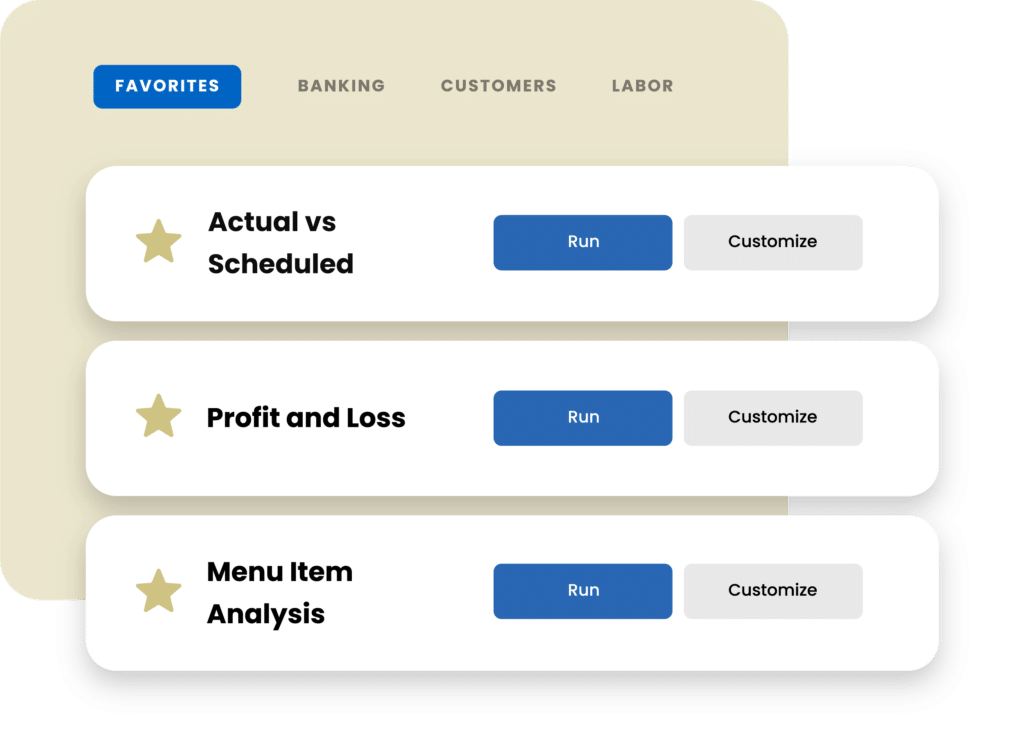
Increasing restaurant sales requires knowing what is happening in real time — not at the end of the month when the period has already closed. Restaurant365 connects POS sales data directly to accounting, inventory, and labor reporting so operators always have a current view of performance across every location.
With Restaurant365, operators can:
✅ Real-time sales data by location, daypart, and item connected directly to accounting and labor
✅ Sales forecasting built on historical POS data, with actual-to-forecast comparison updated daily
✅ Menu performance reporting that connects item-level sales to contribution margin
✅ Best for operators who want sales data to drive in-period decisions, not just end-of-month reports
✅ No additional software cost
❌ Sales data is assembled after the fact, not available in real time when managers can act on it
❌ No automatic connection between POS sales, labor, and food cost data
❌ Comparing performance across locations requires manual consolidation every time
✅ Sales data is captured at the transaction level
❌ Reporting is limited to what the POS tracks — no connection to labor cost, food cost, or financial performance
❌ Does not produce the combined sales-and-cost visibility operators need to evaluate whether revenue growth is actually improving margins
The highest-impact near-term strategies are average ticket growth through staff training and menu design, daypart development targeting underperforming time periods, and menu engineering to promote high-margin items. These strategies work on existing traffic rather than requiring new guest acquisition.
Item-level sales reporting from your POS, combined with contribution margin data from recipe costing, gives you the full picture. An item can be your top seller by volume and still be a low-margin product. The goal is to understand both sales volume and profitability by item — and to use that combination to guide menu placement, promotion, and pricing decisions.
Accurate sales forecasting lets operators align labor to expected demand, which protects both guest experience during peak periods and labor cost during slower ones. When managers are scheduling based on forecast data rather than habit, the result is better service during high-traffic periods — which directly supports revenue.
The most useful metrics are average ticket per cover, sales per labor hour, sales mix by item and category, actual-to-forecast variance by daypart, and revenue by channel. For multi-location operators, comparable location performance across all units adds another layer of actionable insight.
Revenue growth that does not come with margin discipline does not improve profitability. Operators who increase sales while food and labor costs rise proportionally end up in the same financial position. The goal is to grow the top line while keeping prime cost in a range that allows margin to improve — which requires visibility into both simultaneously.
Restaurant365 connects POS sales data to accounting, inventory, and labor in a single platform — giving operators real-time visibility into what is driving revenue, where performance gaps exist, and whether sales growth is translating to margin improvement. Sales forecasting tools use historical data to align labor to demand, and menu performance reporting surfaces the item-level insights that inform pricing and promotion decisions.
Blog Menu
See why more than 50,000 restaurants use Restaurant365
Increasing restaurant sales is a discipline, not a campaign. The operators who grow revenue consistently are the ones who track the right metrics, align their operations to demand, and have the data visibility to identify opportunities and act on them before the moment passes.
Restaurant365 gives operators the real-time sales visibility, forecasting tools, and connected financial reporting needed to grow revenue without losing sight of the margins that make that growth matter. Get a free demo to see how it works for your operation.
Share this blog:

Restaurant365 brings together accounting, operations, scheduling, and more in a flexible platform—empowering restaurants to choose the solutions they need and scale with confidence.